
 GoBeauty Bay
  Shaista Rafi
Beauty & Lifestyle Content Writer
in
Shaista Rafi writes reader-focused beauty
and lifestyle content for GoBeautyBay,
covering skincare, hair care, makeup,
personal care and everyday beauty topics.
Shaista Rafi
Beauty & Lifestyle Content Writer
in
Shaista Rafi writes reader-focused beauty
and lifestyle content for GoBeautyBay,
covering skincare, hair care, makeup,
personal care and everyday beauty topics.
 Mirza Ibrahim Ali Khan
Editorial Reviewer
in
Mirza Ibrahim Ali Khan contributes to
GoBeautyBay's editorial review process,
focusing on clarity, content structure,
topical relevance and reader usefulness.
Mirza Ibrahim Ali Khan
Editorial Reviewer
in
Mirza Ibrahim Ali Khan contributes to
GoBeautyBay's editorial review process,
focusing on clarity, content structure,
topical relevance and reader usefulness.
If you are experiencing hair thinning while taking GLP-1 medications like Ozempic or semaglutide Wegovy, Mounjaro or tirzepatide or Zepbound you might be thinking about whether vitamins can help you. The good thing is that GLP-1 hair loss is often not forever and eating food can help your hair grow back healthy.
If you’re taking semaglutide, our article on Ozempic hair loss explains the potential causes, timeline, and recovery process.
People think that GLP-1 medications like Ozempic or semaglutide Wegovy, Mounjaro or tirzepatide or Zepbound do not hurt the hair roots directly. Instead losing hair is often because of losing weight too fast eating too few calories and not getting enough nutrients, which can cause a temporary problem called telogen effluvium with GLP-1 medications.
To better understand the connection between weight loss medications and hair shedding, start with our comprehensive GLP-1 and Hair Loss guide, which covers causes, prevention, and recovery.
This guide will tell you about the vitamins and nutrients that are good for your hair when you are trying to lose weight with GLP-1 medications like Ozempic or semaglutide Wegovy, Mounjaro or tirzepatide or Zepbound, when you might need to take extra supplements and how to pick them in a safe way, for your hair and GLP-1 medications.
Quick Answer
The most important nutrients for supporting healthy hair while taking GLP-1 medications include:
- Protein
- Iron (only if deficient)
- Vitamin D
- Zinc
- Vitamin B12
- Omega-3 fatty acids
- Biotin (when appropriate)
Rather than taking every supplement available, it’s best to know confirmed deficiencies and maintain a balanced diet.
People using tirzepatide should also explore our guide to Mounjaro hair loss to compare side effects and treatment recommendations.
Why do people who use GLP-1 develop deficiencies?
GLP-1 medications make you feel less hungry which is good, for losing weight..When trying to diet, it is possible that the individual may not be getting the nutrients they need in their bodies if they do not eat a healthy diet.
The hair is made up of hair follicles which are constantly growing, so they need to be constantly fed with nutrients. The person may have nutrient deficiency because when losing weight rapidly the body tends to prioritize what is needed to keep the body working properly.
This can make you lose some hair for a while. GLP-1 users can have this problem because their body is using nutrients for things. GLP-1 is a medication that can cause this to happen.
If you’re unsure whether medication is responsible for your symptoms, learn whether GLP-1 medications can cause hair loss and the factors that contribute to increased shedding.
Comparison Table: Best Vitamins for GLP-1 Hair Loss
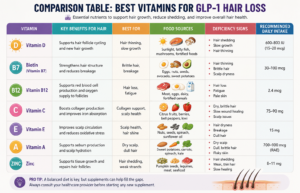
Before starting a nutritional supplement regimen, it is advised to consult with a healthcare professional.
Protein: The Most Important Hair Nutrient
Protein is the most important hair nutrient, as it is the main constituent of keratin, the protein of hair. On a GLP-1 diet, you may find yourself cutting out foods that you would not have otherwise chosen to exclude due to feeling sated sooner due to suppressed hunger. You may lose protein, as it is the fuel for constantly growing hair. Protein is the most fundamental hair nutrient. It is important that you get enough protein daily.
As nutrient levels improve and your weight stabilizes, our guide to hair regrowth after GLP-1 weight loss explains when you can expect healthier hair to return.
Some good sources of protein are:
Eggs
- Chicke
- Fish
- Greek yogurt
- Cottage chees
- Lentils
- Bean
- Tofu
Make sure you are getting protein every day according to your healthcare professionals recommendations. Protein is vital for hair growth. It is essential to get enough protein from these sources.
Iron
Speaking of protein iron deficiency is one of the common nutrient deficiencies that can lead to hair loss in women. Iron deficiency can cause ferritin, which leads to telogen effluvium. Iron is essential for hair growth and low iron levels can cause hair loss. If you notice thinning of your hair or have a long-standing telogen effluvium it is especially important to have normal iron levels.
The best foods to increase your iron levels are:
- Red meat
- Spinach
- Lentils
- Chickpeas
- Pumpkin seed
Make sure to discuss iron supplementation with your healthcare professional because iron supplementation can be very harmful if you are not deficient. Iron is essential. Too much iron can be harmful.
Vitamin D
Vitamin D plays a major role in regulating the normal hair follicle growth cycle. Lack of exposure to sunlight and eating vitamin D deficient diet may lead to a condition where the body is deficient in vitamin D. Vitamin D is needed for hair growth and without it, hair loss may occur.
The best foods to increase your vitamin levels are:
- Salmon
- Sardine
- Egg yolks
- milk
- Fortified cereals
Your healthcare professional can advise you on whether you need a vitamin D supplement. Vitamin D is essential. A supplement can help if you are deficient.
In addition to taking the right vitamins, follow our practical advice on how to stop hair loss while taking GLP-1 medications through proper nutrition, hair care, and lifestyle habits.
Zinc
Zinc is vital for tissue growth and repair well as normal immune function so it is essential to maintain healthy levels. Low zinc levels have been linked to increased hair loss. Zinc is crucial for hair growth and a deficiency can cause hair loss.
The best foods to increase your zinc levels are:
- Beef
- Pumpkin seed
- Cashews
- Chickpeas
- Oysters
Vitamin B12
Vitamin B12 is really important for our bodies. It does a lot of things like helping to make blood cells and helping cells divide.
If you are someone who does not eat meat and you follow a vegetarian or vegan diet you might not get Vitamin B12. It is also very important, for our hair it helps our hair grow.
If we do not have Vitamin B12 we might start losing our hair, which’s not good. It is necessary for our bodies to work the way they should so we need to make sure we get Vitamin B12.
The best foods to increase your vitamin B12 levels are:
- Meat
- Fish
- Eggs
- Dairy product
- Fortified plant-based beverages
Omega-3 Fatty Acids
These fats are essential for a healthy scalp, so be sure to get your daily dose. They also help eliminate dry, flaky skin on your head.
The best foods to eat to raise your intake of omega 3’s are:
Salmon
- Mackerel
- Sardines
- Wanuts
- Chia seeds
- Flaxseed
Biotin
This nutrient has become very popular as a supplement for promoting hair growth. A deficiency is extremely rare in healthy individuals. Biotin supplements should not be used as a treatment for hair loss unless there is a documented deficiency.
The best foods to increase your biotin levels are:
- Eggs
- Almonds
- Walnuts
- Potatoes
Before taking the vitamins and supplements mentioned below, consult your physician. Protein as well as other nutrients such as iron, vitamin D, zinc vitamin B12, omega-3 fatty acids and biotin are essential to hair growth. Remember, protein and these other nutrients are necessary for your hair to grow properly so make sure you get protein and these nutrients in your diet or through supplements and always ask a healthcare professional for advice, on protein and nutrient supplements.
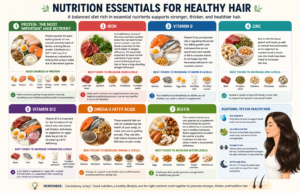
Comparison: Natural Foods vs Supplements
| Nutrient | Food First? | Supplement Only If Needed? |
| Protein | Yes | Sometimes |
| Iron | Yes | Yes |
| Vitamin D | Yes | Yes |
| Zinc | Yes | Yes |
| Vitamin B12 | Yes | Yes |
| Omega-3 | Yes | Optional |
| Biotin | Yes | Usually only if deficient |
What is the best way to take a hair growth supplement?
It is important to have a diet to have healthy hair.
Sometimes taking vitamins and minerals can be helpful if you are not getting enough, from the food you eat. This can happen when you are not eating enough of the foods.
Blood tests show that you are missing some things
- You do not feel like eating much
- Your doctor thinks you should take some vitamins and mineral
You should be careful not to take too many extra vitamins and minerals without talking to your doctor first. Taking much of some things can be bad, for you and cause problems.
Lifestyle Tips to Promote Hair Growth
In addition to a healthy diet:
- Avoid dieting and losing weight
- Eat well
- Drink plenty of fluids
- Get enough sleep
- Reduce stress
- Don’t harm your hair with chemicals or heat.
These things can stress more on your hair that might make it thin or even cause you to lose it.
If you’re prescribed Wegovy, it’s worth understanding the possible Wegovy hair loss side effects and how they compare with other GLP-1 medications.
FAQS
What is the best vitamin, for GLP 1 hair loss?
You will not find one answer that works for everyone.. It is really important to make sure you get enough protein iron if you need it vitamin D, zinc and vitamin B12.
Do I need to take biotin?
You should not take biotin supplements if you do not have a biotin deficiency.
Can vitamins stop GLP-1 hair loss?
Vitamins and minerals are helpful when you are missing some. They cannot stop GLP-1 hair loss from happening
How long will it take for my hair to grow back?
In cases hair starts to grow again after three to nine months if you stop what is causing the problem and your weight becomes stable.
Rapid weight loss is one of the most common triggers for temporary shedding. Read more about hair loss after weight loss injections and why it often occurs during treatment.
Conclusion
As you can see, the situation is not as dramatic as it may seem – although taking GLP-1 drugs can cause hair loss, this side effect is usually temporary. Moreover, in most cases, there is nothing wrong with the hair itself – the problem is that the body lacks certain nutrients during weight loss.
Therefore, pay attention to your diet and consult a healthcare provider about the possibility of vitamin or mineral supplements. This way, even when following a strict diet to lose weight, you will feel safe about your health – and not worry about potential hair loss and thinning.