
 GoBeauty Bay
  Shaista Rafi
Beauty & Lifestyle Content Writer
in
Shaista Rafi writes reader-focused beauty
and lifestyle content for GoBeautyBay,
covering skincare, hair care, makeup,
personal care and everyday beauty topics.
Shaista Rafi
Beauty & Lifestyle Content Writer
in
Shaista Rafi writes reader-focused beauty
and lifestyle content for GoBeautyBay,
covering skincare, hair care, makeup,
personal care and everyday beauty topics.
 Mirza Ibrahim Ali Khan
Editorial Reviewer
in
Mirza Ibrahim Ali Khan contributes to
GoBeautyBay's editorial review process,
focusing on clarity, content structure,
topical relevance and reader usefulness.
Mirza Ibrahim Ali Khan
Editorial Reviewer
in
Mirza Ibrahim Ali Khan contributes to
GoBeautyBay's editorial review process,
focusing on clarity, content structure,
topical relevance and reader usefulness.
Sun-induced pigmentation is a common skin concern that develops when prolonged exposure to ultraviolet (UV) radiation stimulates melanin production. It can cause dark spots, uneven skin tone, freckles, and areas of discoloration on the face. While sunlight is an important source of vitamin D, excessive UV exposure can lead to skin damage and make pigmentation more noticeable.
Home remedies may help support skin hydration, soothe irritation, and maintain a healthy skin barrier. However, they cannot reliably remove sun-induced pigmentation on their own. Daily sunscreen, gentle skincare, and consistent sun protection are the most important steps for preventing further darkening.
What Causes Sun-Induced Pigmentation?
When the skin is exposed to sunlight, it produces melanin as part of its natural protective response. UV radiation can stimulate excess pigment production, resulting in darker areas of skin.
Common types of sun-related pigmentation include:
- Sunspots (solar lentigines): Flat, brown spots that develop in areas exposed to sunlight over time.
- Uneven skin tone: Generalized darkening or irregular pigmentation caused by sun exposure.
- Melasma: Brown or grayish patches that can be influenced by sunlight, hormones, and other factors.
- Post-inflammatory hyperpigmentation: Dark marks that may become more noticeable after sun exposure, particularly following acne or skin irritation.
Understanding the cause of pigmentation is important because different conditions may require different treatments.
Effective Home Remedies for Sun-Induced Pigmentation
Natural home remedies should be used as supportive skincare rather than as a replacement for proven pigmentation treatments. Some simple habits can help keep your skin comfortable and reduce the risk of further discoloration.
- Apply Aloe Vera for Skin Soothing
Aloe vera is widely used in skincare because of its moisturizing and soothing properties. It may help relieve skin discomfort and support hydration after everyday environmental exposure.
Although aloe vera has been studied for potential effects on pigmentation, there is limited strong clinical evidence that ordinary aloe vera gel reliably fades sunspots.
How to use it:
- Choose a fragrance-free, formulated aloe vera gel.
- Apply a small amount to clean skin.
- Follow with a gentle moisturizer if needed.
- Stop using the product if it causes itching, redness, or burning.
Aloe vera should not be considered a sunscreen or a treatment that reverses UV-related skin damage.
- Use a Cool Compress to Soothe Sun-Exposed Skin
A cool, damp cloth can help soothe mild warmth or discomfort after sun exposure. This is especially useful when the skin feels warm or irritated.
How to use it:
- Soak a clean, soft cloth in cool water.
- Gently place it on the affected area for 5–10 minutes.
- Repeat as needed for comfort.
- Apply a gentle moisturizer afterward.
Avoid applying ice directly to the skin. If you experience significant sunburn, blistering, severe pain, or other concerning symptoms, seek medical advice.
A cool compress can help with comfort, but it does not directly remove pigmentation.
- Try Green Tea for Antioxidant Support
Green tea contains polyphenols, including EGCG, that have antioxidant and anti-inflammatory properties. These compounds have been investigated for their potential role in skincare and protection against environmental stress.
However, drinking green tea or applying homemade green tea preparations has not been established as a reliable treatment for sun-induced pigmentation.
How to incorporate green tea into your routine:
- Choose a properly formulated skincare product containing green tea extract.
- Patch-test new skincare products before applying them to your face.
- Avoid applying hot tea or irritating homemade mixtures to the skin.
- Continue using sunscreen daily.
Green tea can be a supportive ingredient, but it should not replace sun protection.
- Use Oatmeal to Support the Skin Barrier
Colloidal oatmeal is commonly used in skincare products designed to soothe dry or irritated skin. It may help support the skin barrier and improve skin comfort.
This can be helpful when harsh skincare products or sun exposure leave the skin feeling dry. However, oatmeal does not directly eliminate sunspots or excess melanin.
How to use it:
- Select a gentle moisturizer containing colloidal oatmeal.
- Apply it according to the product instructions.
- Avoid harsh rubbing or scrubbing with homemade oatmeal mixtures.
- Choose fragrance-free options if your skin is sensitive.
Maintaining a healthy skin barrier may help reduce irritation that can contribute to additional pigmentation.
- Eat Foods Rich in Antioxidants
A balanced diet provides nutrients that support normal skin function and overall health. Fruits and vegetables contain vitamins and antioxidant compounds that contribute to the body’s natural defense systems.
Consider including:
- Vitamin C-rich foods: Guava, amla, oranges, bell peppers, and kiwi.
- Colorful vegetables: Carrots, spinach, sweet potatoes, and other vegetables.
- Healthy fats: Nuts, seeds, and sources of unsaturated fats.
- Protein-rich foods: Eggs, lentils, beans, fish, or other suitable protein sources.
Eating a nutrient-rich diet supports general well-being, but no specific food has been proven to remove established sun-induced pigmentation. Food should complement your skincare routine rather than replace sunscreen or targeted treatment.
- Drink Enough Water for Healthy Skin
Staying hydrated supports normal body functions and helps maintain overall health. Adequate fluid intake can also support skin comfort when you are dehydrated.
However, drinking extra water does not directly fade sunspots or reverse UV-induced pigmentation.
Healthy hydration habits:
- Drink water regularly throughout the day.
- Include water-rich foods such as cucumber, watermelon, and oranges.
- Use a moisturizer suited to your skin type.
- Avoid relying on water as a replacement for balanced nutrition or sun protection.
Hydration is beneficial for general skin health, but it is not a standalone pigmentation treatment.
- Use Sunscreen Every Morning
Sunscreen is the most important part of managing sun-induced pigmentation at home. UV exposure can stimulate melanin production, darken existing spots, and make some pigmentation conditions more difficult to control.
Choose a broad-spectrum sunscreen with SPF 30 or higher. SPF 50 may be a practical choice for prolonged outdoor exposure, depending on your needs.
Sunscreen tips for pigmentation
- Apply sunscreen every morning to exposed skin.
- Use a sufficient amount and spread it evenly.
- Reapply when outdoors, particularly after sweating or swimming.
- Wear a wide-brimmed hat and seek shade during intense sunlight.
- Consider a tinted sunscreen containing iron oxides if you have melasma or pigmentation that is aggravated by visible light.
Sunscreen helps prevent further UV-related darkening, but it does not guarantee immediate removal of existing pigmentation.
- Use Gentle Skincare to Prevent Further Darkening
Skin irritation can contribute to pigmentation, particularly in people who develop post-inflammatory hyperpigmentation. A gentle skincare routine helps minimize unnecessary irritation and supports the skin barrier.
Morning routine
- Cleanse your face gently, or rinse with water if suitable for your skin.
- Apply a moisturizer if needed.
- Use broad-spectrum sunscreen.
- Wear protective clothing or a hat when spending time outdoors.
Evening routine
- Remove sunscreen and makeup gently.
- Cleanse with a mild face wash.
- Apply a moisturizer.
- Use a suitable pigmentation treatment if recommended by a dermatologist.
Avoid introducing several exfoliating products at once. Excessive exfoliation can cause irritation and potentially worsen dark marks.
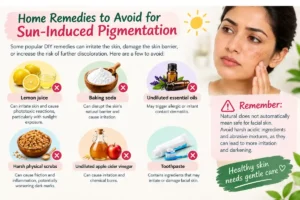
Home Remedies to Avoid for Sun-Induced Pigmentation
How Long Does Sun-Induced Pigmentation Take to Fade?
The time required for pigmentation to improve depends on its cause, depth, skin type, and whether additional sun exposure continues.
- Mild pigmentation may gradually become less noticeable over several months.
- Sunspots can persist and may not fade significantly without targeted treatment.
- Melasma may require long-term management and can recur with sun exposure.
- Pigmentation following inflammation or irritation may take months to fade.
Consistent sunscreen use and avoiding further skin irritation can help prevent pigmentation from becoming darker while your skin recovers.
When Should You See a Dermatologist?
Home remedies may not be sufficient for persistent sun-induced pigmentation. A dermatologist can assess the skin and identify whether the discoloration is caused by sunspots, melasma, post-inflammatory hyperpigmentation, or another condition.
Seek professional advice if:
- Dark spots continue to spread or become more noticeable.
- Pigmentation does not improve with sun protection.
- You develop persistent itching, scaling, or irritation.
- A new dark spot changes in size, shape, or color.
- You are unsure whether a pigmented spot is harmless.
A dermatologist may recommend treatments such as azelaic acid, retinoids, other pigment-targeting ingredients, chemical peels, or procedures depending on the diagnosis and your skin’s needs.
Final Thoughts
Home remedies for sun-induced pigmentation can support skin comfort and overall skin health, but they are not a guaranteed way to remove dark spots. Aloe vera, oatmeal, green tea, and a balanced diet may offer supportive benefits, while sunscreen remains essential for preventing further sun-related darkening.
For healthier-looking, more even skin, focus on daily broad-spectrum sunscreen, gentle skincare, protective habits, and evidence-based treatment when needed. Avoid harsh DIY remedies that can irritate your skin and make pigmentation more difficult to manage.