
 GoBeauty Bay
  Shaista Rafi
Beauty & Lifestyle Content Writer
in
Shaista Rafi writes reader-focused beauty
and lifestyle content for GoBeautyBay,
covering skincare, hair care, makeup,
personal care and everyday beauty topics.
Shaista Rafi
Beauty & Lifestyle Content Writer
in
Shaista Rafi writes reader-focused beauty
and lifestyle content for GoBeautyBay,
covering skincare, hair care, makeup,
personal care and everyday beauty topics.
 Mirza Ibrahim Ali Khan
Editorial Reviewer
in
Mirza Ibrahim Ali Khan contributes to
GoBeautyBay's editorial review process,
focusing on clarity, content structure,
topical relevance and reader usefulness.
Mirza Ibrahim Ali Khan
Editorial Reviewer
in
Mirza Ibrahim Ali Khan contributes to
GoBeautyBay's editorial review process,
focusing on clarity, content structure,
topical relevance and reader usefulness.
There’s much more involved in choosing the correct foundation than blindly picking the one everyone’s talking about and the shade that looks best in an online photo. Not only do you have to consider your skin type, undertone, wanted amount of coverage and perfect finishing effect, but you also must consider environmental factors and how it fits into the rest of your makeup looks. In this guide, it details how to write and interpret detailed, more than just a ‘fresh on’ application, foundation reviews. It covers application, wear, etc., all the way to what kind of effect the foundation will have on your skin.
A foundation may look flawless for a few hours before looking oily, while another might be amazing for coverage but highlight dry patches.
Perhaps a lightweight foundation will make your skin appear flawless initially but won’t provide the coverage you require. When writing or reading foundation reviews, focus on these key factors to determine if a product will work for you. Key Aspects of a Foundation Review A comprehensive foundation review assesses more than just the packaging and overall appeal of the product. The most critical elements to examine are:
Shade range undertones coverage finishing texture compatibility with skin types Application Bendability wear time oxidation comfort Ingredient profile transferability Value Of money These criteria allow reviewers to convey the actual performance of a foundation as opposed to simply their personal liking or dislike of it.
1. Shade Range and Undertone
The very first step is usually matching the foundation shade to your skin tone, the darkness of the shade along with the undertone is very important and commonly shades fall into warm, neutral, cool and olive ranges. To check whether your selected foundation is suitable for your face as well as neck it is advised to test the swatch down your jaw line as this will provide a clearer reflection of the shade than a swatch on your hand. Makeup artists also tend to advise testing out foundation in either natural or neutral light, a good review of a foundation should tell the reader about the following details: The number of shares in total whether the shades range from light, medium, tan and deep Whether the foundation is warm, neutral, cool or olive whether the product appears lighter or deeper than one would expect whether the formula oxides upon application. Variations in the range of shades are very useful to those whose skin tone is more difficult to match.
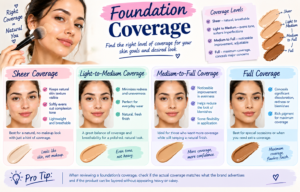
2. Coverage
3. Finish
A foundation’s finish can be incredibly influential in the appearance of the product upon application. The most popular of which being:
Matte: Low to no-shine finish; usually more suited for those with oily complexions.
Natural: Similar to and intended to look like the skin itself.
Satin: A mixture somewhere between matte and luminous/glow.
Dewy: Intends to achieve a hydrating and luminous finish; can look very shiny.
Radiant: Similar to dewy in terms of glow but rather provides more light reflection.
Note, for one thing, the same shade can look different given the finish used in the foundation.
4. Texture & Bendability
The texture of the foundation will affect the application process, as well as how the foundation wears on the skin. Application textures include thin and fluid serum-like creamy whipped or mousse thick cream solid stick as part of foundation performance, reviewers must use detailed language; explain how quickly and smoothly the foundation applies to the face and indicate which applicator (brush, sponge, fingers) provides the best application finish. Vague terms such as \”smooth applying\” or \”easy to blend, \” however, cannot substitute detailed explanations
5. What kind of skin can it be used on?
Different types of foundation give various coverage on skin types. When it is used on
- DRY SKIN, its formula should keep this from sticking into any dry zones and showing off texture; not feeling sticky and heavy while on and settling into fine lines; and it must also have a very smooth and even look without any mattifying effect, the finishes such as “hydrating, satin and natural” are more suitable.
- When it is used on oily SKIN, it needs to focus on oil control, long wearing without separation or greasy look, how does it perform in humid condition. When foundations are formulated matte and soft matte, these might be suggested.
- When it comes to COMBINATION SKIN, a formula that gives consistent and balance coverage from different parts is needed. The suitable foundation type is possibly “natural and satin”.
- As for SENSITIVE SKIN, reviewer should note if there were any fragrance added into the formula and how did it reacted on skin during use (which might vary with individuals).
6. Wear Time
An important part of any foundation review is its wearability throughout the day.
This section should include:
- The approximate number of hours the foundation lasts
- Whether coverage fades evenly throughout wear
- Whether it separates, especially around the nose
- Whether it settles into lines
- Whether it becomes increasingly oily or shiny
- Whether it transfers onto clothing
- Performance under varying climatic conditions –
- How does it hold up in heat and humidity?
Testing the foundation in conditions mimicking a typical day’s wear will provide more valuable feedback. For example, how it holds up indoors at room temperature might differ from its performance outdoors on a hot day.
7 Oxidation-
This is change that occurs with colour after application to the skin. The foundation might darken or have more an orange/yellow tone and generally might warmer as it sits or oxidizes throughout the day. The issue the foundation review should tell the audience is if this is happening because what looks like a perfect match may not at all, only hours later.
A successful foundation review could contrast application immediately after, after setting and several hours after so that they reader know how the shade performs on their own skin.
8.Ingredients of Foundation
Why a foundation might act a certain way can be found through looking at its ingredients. Some ingredients might work to moisturize while others are placed within the makeup to absorb shine or to create a long lasting effect. Some common foundations can contain Glycerine, Hyaluronic acid, Squalae, silicones, emollients, mineral pigments and film forming agents. However, the only issue with identifying some foundation ingredients is that an ingredient can not necessarily be attributed with a foundation working for everybody, for example the whole composition of the foundation works best.
9.Application Methods and Skin Preparation
Foundation can become an absolute nightmare, so applying it over the wrong skincare can be terrible for your foundation and what that review needs to tell their readers is that their skin was prepared for this foundation to the best of its ability.
When reviewing: the skin must be clean and moisturized, then sunscreen applied andprimer(if applicable), only until the sunscreen and moisturizer are applied to their skin until they have had time to soak completely in. An individual that reviews must also disclose what tools worked best.
Does the foundation blend best with a brush, sponge, or fingertips?
Understanding how a foundation pairs with a sponge is often very helpful.
Foundation Reviews for Indian Skin Tones
When considering Indian consumers, shade and undertone are especially important. Many seek foundations that are suitable for warm, golden, neutral and olive undertones, although the diversity of Indian skin tones cannot be limited to these three categories.
When reviewing foundation, ideally mention your approximate depth and undertone and describe how the product performs in natural daylight.
Remember to apply the shade to your jawline for the best understanding of the match, as this has often been advised by experts.
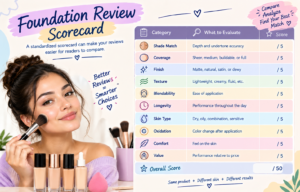
Foundation Review Scorecard
How to Read Foundation Reviews
Don’t limit yourself to just one reviewer. Seek out recurring themes and observations, especially regarding: The exact match to your skin tone oxidation coverage texture Wear ability skin type Compatibility Many of the current trends in beauty include focus on breathable and lightweight foundations, Shade inclusivity, and whether a foundation provides good day to wear performance rather than a heavily pigmented, medium-to-high coverage. However, remember individual experiences may vary.
In conclusion
A solid foundation review guides a reader through their decision-making process rather than stating if a product is “good or bad. “Good or bad could mean so many things relative to what is happening, why is it working, and for what makeup purpose. There is no one foundation that works with everyone’s skin or for everyone to achieve the desired makeup finish they are searching for. A helpful foundation review guides you who it is best for, application, its coverage, its finish, its wear, its performance and shade performance as well as how well the formula wears and if the foundation would work with specific skin types and tones. This page could stand as your main review category for the Foundation Makeup section on my site for reviews like the specific foundation makeup, comparison reviews like the pros & cons to Liquid Vs Foundation Makeup, how-to guides like: makeup tips, types of foundation makeup, foundation ingredients & skin health, skin prep before applying foundation.