
 GoBeauty Bay
  Shaista Rafi
Beauty & Lifestyle Content Writer
in
Shaista Rafi writes reader-focused beauty
and lifestyle content for GoBeautyBay,
covering skincare, hair care, makeup,
personal care and everyday beauty topics.
Shaista Rafi
Beauty & Lifestyle Content Writer
in
Shaista Rafi writes reader-focused beauty
and lifestyle content for GoBeautyBay,
covering skincare, hair care, makeup,
personal care and everyday beauty topics.
 Mirza Ibrahim Ali Khan
Editorial Reviewer
in
Mirza Ibrahim Ali Khan contributes to
GoBeautyBay's editorial review process,
focusing on clarity, content structure,
topical relevance and reader usefulness.
Mirza Ibrahim Ali Khan
Editorial Reviewer
in
Mirza Ibrahim Ali Khan contributes to
GoBeautyBay's editorial review process,
focusing on clarity, content structure,
topical relevance and reader usefulness.
Hair loss after Ozempic, Wegovy, Mounjaro, and Zepbound is now one of the most feared side effects of weight loss injections. Although these drugs have helped millions of people achieve their health goals, there is a worrying side effect that can develop several months into the treatment – dramatic hair loss.
If you have noticed more hair than usual falling out with your brush, in the shower, or on your pillow after beginning your weight loss injections, you are not alone.
Fortunately, there is no need to panic as most instances of hair loss that are triggered by weight loss are temporary, caused by significant stress to the body the process inflicts.
In this article we will look at the reasons why you’re worried check if there are any risks and figure out what you can do to grow healthy hair.
If you’re new to this topic, start with our comprehensive GLP-1 and Hair Loss guide to understand why hair shedding can occur during medical weight loss.
Do Weight Loss Injections Affect Hair Loss?
I do not think that the main things in Ozempic, Wegovy, Mounjaro and Zepbound will hurt your hair. The Weight Loss Injections like Ozempic, Wegovy, Mounjaro and Zepbound are probably not making you lose hair.
There are a reasons why you might be losing hair. These are:
Many people ask does GLP-1 cause hair loss? Our detailed guide explains the science behind medication-related shedding and common contributing factors.
What you eat can affect your hair.
If you start eating food to lose weight you might not get all the good things your body needs.
This can change how your hair grows.Your hair needs things, like vitamins, minerals and protein to be healthy.
Which weight loss injections are related with hair loss?
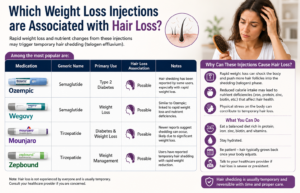
Many people who have lost a significant amount of weight using these drugs have noticed that they had become thinner after a few months.
Why Do You Lose Hair With Weight Loss Injections?
Rapid Weight Loss
Experiencing rapid weight loss may cause extreme stress to the body.
The body does not see hair growth as essential, so it can begin to pull nutrients from the hair to use elsewhere.
This can cause hair loss, or the shedding of hair.
Telogen Effluvium
Telogen effluvium is a condition where a higher-than-normal amount of hair goes through the resting point and sheds a few months later.
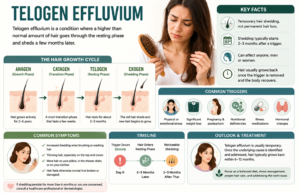
Signs include:
- Thinning of the hair
- Increased shedding
- Wider part on the head
- More hair loss during washing
Hair loss due to telogen effluvium usually resolves itself after the main cause has been addressed.
Eating very less Calories
Many people who are using weight loss injections will often eat less due to the appetite suppressing side effect of the medication.
Eating too few calories can cause:
- Protein deficiency
- Low levels of vitamins
- Low levels of minerals
Vitamins, minerals and Protein are needed for healthy hair growth.
Hair Loss Due To Nutritional Deficiencies
Healthy hair growth needs many different nutrients.
Concerned about ongoing shedding? Discover how to stop hair loss while taking GLP-1 medications with practical nutrition and hair care tips.
Nutrients That Strengthen Hair Health
| Nutrient | Why It’s Important |
| Protein | Builds hair structure |
| Iron | Delivers oxygen to follicles |
| Zinc | Supports tissue growth |
| Vitamin D | Supports follicle function |
| Vitamin B12 | Helps healthy cell growth |
| Omega-3 Fatty Acids | Supports scalp health |
Hair loss deficiencies can make shedding terrible and slow down recovery.
Proper nutrition plays a key role in recovery, so explore the best vitamins for GLP-1 hair loss to help support stronger, healthier hair.
How often do people lose hair after getting weight loss injections?
Some studies that were done and stories that people shared in the year 2026 show that hair loss, which is also called alopecia does not usually happen after taking the weight loss medication.
However, temporary hair loss appears more frequently among people who:
- Lose weight rapidly
- Eat significantly fewer calories
- Have pre-existing nutrient deficiencies
- Have a history of hair thinning
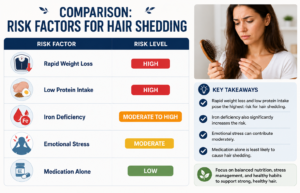
Comparison: Risk Factors for Hair Shedding
 When Does Hair Loss Start?
 When Does Hair Loss Start?
Many people notice shedding:
2 to 4 months after major weight loss begins.
This delayed arrival often confuses people because hair loss does not occur instantly after starting medication.
How Long Does Hair Shedding take place?
For most people, temporary shedding improves within 3 to 9 months. Recovery depends on factors such as:
- Nutrition
- Stress levels
- Overall health
- Rate of weight loss
Hair regrowth takes time because hair grows slowly.
Signs Your Hair Loss Is Temporary
Temporary shedding usually includes:
- Hair falling evenly across the scalp
- More shedding during brushing and washing
- No permanent bald patches
- Gradual improvement after weight stabilizes
When Should You See a Doctor?
Consult a healthcare professional if you notice:
- Bald patches
- Severe scalp irritation
- Sudden extreme shedding
- Persistent thinning for more than a year
- Other symptoms, such as fatigue or dizziness
Additional medical conditions may contribute to hair loss.
Troubleshooting Guide
| Problem | Possible Cause | Potential Solution |
| Sudden shedding | Telogen effluvium | Improve nutrition and monitor |
| Dry, brittle hair | Protein deficiency | Increase protein intake |
| Continued thinning | Nutritional issue | Consult your doctor |
| Bald patches | Another hair condition | Seek medical evaluation |
Does your hair grow back?
It usually does, if the reason you lost your hair was because of telogen effluvium.
When you lose hair because you do not have nutrients or you are dieting or you have hormone problems or you lost a lot of weight or you are under a lot of stress your hair will start to grow again after you fix the problem. This means your hormone levels have to go to normal. You have to have the right amount of nutrients again. If you were dieting and losing weight fast your hair will start to grow when you stop losing weight so fast. It will take some time for your hair to go back, to the way it was before.
Comparison: Weight Loss and Hair Shedding Timeline
If your shedding has started to improve, read our guide on hair regrowth after GLP-1 weight loss to learn what the recovery timeline typically looks like.
| Stage | Typical Timeline |
| Rapid weight loss begins. | Month 1 |
| Hair shedding starts | Months 2-4 |
| Shedding slows | Months 4-8 |
| Visible regrowth | Months 6-12 |
Frequently Asked Questions
Can Ozempic cause hair loss?
It is a known side effect that some patients may begin to experience hair shedding, but most of the time, it is not a direct result of the medication. Hair loss is primarily connected to a faster rate of weight loss, which can be a side effect of Ozempic.
If you’re taking semaglutide, learn more about Ozempic hair loss, including why it happens and how long it may last.
Does Wegovy make your hair thin?
The medication can cause a person to experience thinner hair strands during the process of losing weight.
If you’re prescribed Wegovy, our article about Wegovy hair loss side effects explains what to expect during treatment.
Is hair loss from weight loss injections permanent?
In most cases, it is not permanent.
Will my hair grow again?
In most cases, yes.
Should I stop taking meds?
It is not advised to stop any medications you are currently taking without first consulting a medical professional.
Final Thoughts
While hair loss may seem concerning, it is usually not permanent and is short term. Patients who have used Ozempic, Wegovy, Mounjaro, Zepbound, or other similar medications have seen their hair return to its normal state after they stopped losing weight as rapidly as they did. The most likely reason that a person who has begun to lose hair after they started taking medication to lose weight is due to their change in diet, rather than the medication itself, but it is essential to speak with your doctor if you are concerned.
People using tirzepatide should also read our guide on Mounjaro hair loss to understand the possible causes of increased shedding.