
 GoBeauty Bay
 Shaista Rafi
Beauty & Lifestyle Content Writer
in
Shaista Rafi writes reader-focused beauty
and lifestyle content for GoBeautyBay,
covering skincare, hair care, makeup,
personal care and everyday beauty topics.
 Mirza Ibrahim Ali Khan
Editorial Reviewer
in
Mirza Ibrahim Ali Khan contributes to
GoBeautyBay's editorial review process,
focusing on clarity, content structure,
topical relevance and reader usefulness.
If you have oily skin, choosing the right moisturizer can smooth out the shine. A good moisturizer won’t remove all shine and produce a totally flat matte look, but it will provide the skin with enough moisture and the type of support to the skin barrier that it needs without the skin feeling greasy or soaked. Here’s what people do wrong: if you have oily skin, you think that you do not need moisturizer. The issue is that oily skin can be dry, tight, sensitive, and uncomfortable when using products for acne-prone skin, working with acne medication, using exfoliants and cleansers, or dealing with dryness or drastic weather changes.
This article is part of our
Oily Skin Moisturizer Resource Center
Do I put moisturizer on oily skin?
You should – and if you’re not applying moisturizer to oily skin, then you will probably notice your skin starts to feel tight, dry, and a little uncomfortable. Or maybe your skin is so dehydrated, and your barrier so sensitive, that you’re sipping gallons of water and eating all the healthy oils you can get your hands on! You can’t strip the oil with a moisturizer. However, forgoing it can be uncomfortable from dehydration, tightness, or patchiness in sensitive areas, and it can be much more awkward to use your face sunscreen, makeup and any active skincare products.
Steps
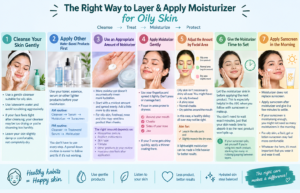
How to Use Moisturizer at Night
Your evening routine could be very straightforward.
Cleanser + moisturizer if needs
Always use the exfoliant or retinoid as directed, but reduce the amount of treatment to account for your skin’s sensitivity. When a treatment is likely to cause peeling, dryness, or sensitization, you may wish to protect your moisturizer to a greater degree from your barrier. For instance, you may wear a gel, gel-cream, or light lotion.
How Often Should You Moisturize Oily Skin?
Often you will: AM: moisturizer + SPF PM: moisturizer but it really depends on your skin and your routine. You might need it more often if you: Have acne treatments or Retinoids Use exfoliants Have dry patches Have a very dry climate Have seasonal dryness If your skin can handle it, don’t waste it all by putting on a thick coat just because it’s the right routine.
Moisturizing Oily Skin Without Making It Greasy
If you’ve attempted to hydrate your skin and it still looks shiny you: Should you use a lighter consistency (gel, light cream or even serum versus cream). You may also be applying too much or applying it incorrectly: apply a small amount on your forehead, nose and chin, and a bit more on areas where the skin is dry.
Simplify your other products Serums, essences, oils and lotions can all add up quickly and be too much.
Keep the weather in mind. The texture of a moisturizer that seems to be perfect in the winter might be a bit heavy in the summer.
Moisturizing Oily Skin with Patches of Dryness
Patching dry skin in an oily face Or, if the oiliness is only present in your T-Zone and not throughout your whole face, and you’re having a few patches of dryness on your cheeks, don’t use a light watery gel moisturizer. Use a gel-cream or light lotion moisturizer instead so that it’ll moisturize dry patches without creating an oilier film on your face. Or you can choose to use different.
You can also use different amounts across your face:
| Area | Application |
| Forehead | Thin layer |
| Nose | Thin layer |
| Chin | Thin to moderate layer |
| Cheeks | Moderate layer |
| Around mouth | Slightly thicker if needed |
| Dry patches | Add a small amount as needed |
Is your dry skin painful and cracked? Does it itch excessively and is very red or lasting longer than expected? Think about other causes to your dry skin. See your doctor or a dermatologist.
How to Use Moisturizer with Salicylic Acid
Where can you add a moisturizer when using salicylic acid and retinoids moisturizer is not always necessary when using salicylic acid an example:
Cleanser salicylic acid treatment moisturizer
Use a moisturizer that contains supportive barrier ingredients like glycerine panthenol ceramides or another barrier strengthening ingredient the way a nourishing treatment is added to an exfoliation.
If your skin is dry tight peels or irritated you should consider pulling back irritating products and working on skin comfort.
Can you put moisturizer over retinoids Many people experience dryness or irritation when using a retinoid this is even more likely when starting or increasing frequency.
A moisturizer plays a key role in a retinoid routine.
You might use:
Cleanser retinoid moisturizer or include moisturizer around the retinoid step if you need comfort.
Follow your retinoid instructions and do not add multiple irritating active ingredients without a good reason.
Can I apply moisturizer before makeup A thinner moisturizer can help your makeup go on smoother.
A typical morning routine is:
Cleanser moisturizer sunscreen makeup Allow each layer to absorb for a couple of minutes before applying the next one.
If your makeup starts to become overly shiny do not automatically remove your moisturizer experiment with the amount the texture and the finish as well as the compatibility of your other products.
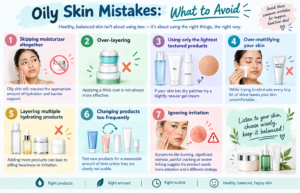
Oily Skin Mistakes:
What is the right amount of moisturizer to use
You should not feel like your face is coated with moisturizer.
Some signs you are using too much are:
Your skin feels greasy shortly after applying
The product does not seem to absorb well
Sunscreen or foundation quickly clumps together
You feel uncomfortable throughout the dayYou may be using too little if:
Your face feels tight after applying
You are unable to get rid of dry patches
Your skin feels rough
Your skin becomes increasingly irritated These are not set in stone but may help you tweak your approach.
How to come up with a simple moisturizer routine for oily skin
Mornings
- Gentle cleansing
- Optional serum or treatment
- Light moisturizer
- SPF-based sunscreen
Evenings
- Gentle cleansing
- Optional treatment
- Moisturizer
For combination skin parts of your face will require more moisturizer than others parts.
For oily skin with dry spots you may want to lean towards gel-cream or a lightweight lotion as opposed to auto-selection of the thinnest gel.
Final thoughts
Selecting the amount and type of moisturizer for oily skin is both a matter of feel and water content. Begin with a minimal amount using a texture that matches your skin and tap gently.Adjust the amount depending on your age and skin sensations.
The right amount may be more than your skin feels comfortable with and less than you think is enough.
Choose a lightweight gel for very oily skin a gel-cream or lightweight lotion for those with dry patches.
If you are using ingredients like salicylic acid or retinoids incorporate your moisturizer as a supporting player.
The best skincare routine is not the one with the most products but the one that keeps your skin comfortable hydrated and compatible with the rest of your products.