
 GoBeauty Bay
  Shaista Rafi
Beauty & Lifestyle Content Writer
in
Shaista Rafi writes reader-focused beauty
and lifestyle content for GoBeautyBay,
covering skincare, hair care, makeup,
personal care and everyday beauty topics.
Shaista Rafi
Beauty & Lifestyle Content Writer
in
Shaista Rafi writes reader-focused beauty
and lifestyle content for GoBeautyBay,
covering skincare, hair care, makeup,
personal care and everyday beauty topics.
 Mirza Ibrahim Ali Khan
Editorial Reviewer
in
Mirza Ibrahim Ali Khan contributes to
GoBeautyBay's editorial review process,
focusing on clarity, content structure,
topical relevance and reader usefulness.
Mirza Ibrahim Ali Khan
Editorial Reviewer
in
Mirza Ibrahim Ali Khan contributes to
GoBeautyBay's editorial review process,
focusing on clarity, content structure,
topical relevance and reader usefulness.
What Are GLP-1 Medications?
GLP-1 stands for glucagon- peptide-1, a hormone that helps with a lot of things like
- Blood sugar
- Appetite
- Digestion
- Insulin production
GLP-1 medications like Ozempic and Mounjaro and others have been really helpful for people with weight issues. Type 2 diabetes. Some people have noticed that they are losing more hair than usual after starting to take GLP-1 medications.
For a complete overview of the connection between weight loss medications and shedding, visit our GLP-1 and Hair Loss guide.
If you are seeing a lot of hair in your shower drain or on your hairbrush after starting GLP-1 medications you are not alone. Researchers are not certain how exactly this process works, but they do know that GLP-1 medications do not appear to have a negative effect on hair follicles. They believe that rapid weight loss and nutrient deficiency might be responsible for hair loss following their use.
GLP-1 Medications Cause Hair Loss?
The simple answer is: GLP-1 medications probably do not cause hair to fall out forever.
While GLP-1 medications themselves are likely not the reason for hair loss some people have said that they lost hair after taking the medication. Researchers think that losing weight quickly and eating too few calories can cause hair to fall out. GLP-1 medications, like Ozempic and Mounjaro can cause people to lose weight quickly which can lead to hair loss.
If your hair started thinning after beginning treatment, you may also want to read about hair loss after weight loss injections and the factors that contribute to excessive shedding.
Popular GLP-1 medications include:
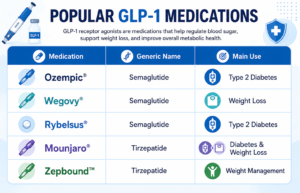
GLP-1 medications are helpful in promoting weight loss for many people.
Is Hair Loss an Official Side Effect of GLP-1 Medications?
According to the FDA, hair loss isn’t an officially reported common side effect of GLP-1 medications. The most commonly noted side effects of these medications are:
- Nausea
- Vomiting
- Constipation or Diarrhea
- Discomfort or Stomach pain
Still, more people are noticing that they started shedding noticeable amounts of hair on these medications after substantial weight loss.
Why People Having GLP-1 Medications Experiencing Hair Loss?
There are some reasons why people on GLP-1 medications may lose more hair than usual.
-
Losing Weight Fast
When you lose a lot of weight more than 10% of your body weight you can lose more hair, than usual. This is because your body is trying to survive. It focus on keeping you alive and stops growing new hair.
-
Telogen Effluvium
Therefore because of the mechanism known as telogen effluvium Patients who are taking semaglutide or other GLP-1 medications can experience hair loss as a side effect. It can be triggered by a wide range of factors including:
- Losing weight fast
- Having surgery
- Being very sick
- Feeling extremely stressed
- Not getting nutrients
When you start taking GLP-1 medications telogen effluvium can cause more of your hair follicles to stop growing and start shedding.
Signs and Symptoms of Telogen Effluvium
If you have telogen effluvium you may notice that GLP-1 medications are causing you to lose hair. The signs of this condition include:
- More hair falls out when you wash or brush your hair and GLP-1 medications can make this happen.
- More hair on your pillow in the morning
- More thinning of the hair on the top of the head or across the scalp
- Part lines widening
- Losing more hair than usual
Luckily for you, telogen effluvium is usually temporary, vanishing after several months with the cessation of the offending agent, be it a crash diet or another lifestyle change.
-
Nutrient Deficiency
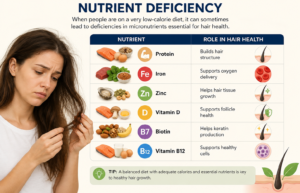
Many factors may contribute to telogen effluvium, including a diet deficient in vital nutrients.
If you’re experiencing increased shedding, learn how to stop hair loss while taking GLP-1 medications with practical nutrition and hair care strategies.
According to research and clinical trials conducted in 2026.
The 2026 clinical findings concluded that since the medication itself is not damaging the hair follicles, there is likely a deficiency that is causing or contributing to hair loss or shedding in patients taking semaglutide.
Comparison of Hair Loss Risk Factors
| Risk Factor | Likelihood of Shedding |
| Rapid weight loss | High |
| Severe calorie restriction | High |
| Nutritional deficiencies | Moderate to High |
| Stress | Moderate |
| GLP-1 medication alone | Low |
Which GLP-1 Medications May Cause Hair Loss?
The drugs that are most associated with hair loss are semaglutide and tirzepatide. Popular brands of these drugs are listed below.
Semaglutide: Wegovy, Rybelsus , Ozempic
Tirzepatide: Zepbound,Mounjaro
Some people who have taken semaglutide and tirzepatide have said that they lost hair after they lost a lot of weight. Now we do not have strong evidence that one medication is worse than the other when it comes to side effects.
Who Is Most Likely to Lose Hair on semaglutide and tirzepatide Medications?
You are more likely to lose hair if you lose a lot of weight quickly. You are also more likely to lose hair if you do not eat protein. If you have iron or ferritin levels you may lose more hair. Stress can also cause hair loss. If you have a thyroid condition or have lost hair before you may lose hair on semaglutide and tirzepatide.
Signs of Temporary Hair Loss
If you notice that your hair is thinning over your head it might be temporary. If you lose hair when you wash or brush it it could be temporary. If you shed a lot of hair for a months it might be temporary. If you do not have any spots, it is probably temporary. Many people see their hair get better after they stop losing weight fast. If you lose hair due to telogen effluvium, it will most likely start growing again after several months.
How long does hair loss from semaglutide and tirzepatide medications occur for?
Hair loss due to these drugs can last for 3-9 months. Sometimes it can last for a year or more. Telogen effluvium usually starts a months after you lose a lot of weight or have surgery. Luckily it usually gets better after a months.
When Taking semaglutide and tirzepatide Medication How to Reduce Hair Loss ?
- Do not drastically reduce the number of calories you consume
- Limit Damage, to Your Hair
- Increase your intake of high-quality protein
- Consult with Your Doctor to Address Nutrient Deficiencies
- Focus on eating nutrient-dense foods
Troubleshooting Guide
| Problem | Possible Cause | Solution |
| Sudden shedding | Telogen effluvium | Monitor and improve nutrition |
| Dry, brittle hair | Protein deficiency | Increase protein intake |
| Continued thinning | Nutrient deficiency | Consult your doctor |
| Patchy hair loss | Other condition | Seek medical evaluation |
Real-World Experiences
What To Expect: Losing Hair On These Medications
people who have lost hair while taking these medications have been taking them for a long time and have lost a lot of weight. For example some people have said:
“I noticed I was losing hair after three months of losing weight really fast.”
“After I started eating healthier and stopped losing weight quickly my hair started growing back.”
Not everyone who takes GLP-1 medications will lose hair and many people do lose. It can be upsetting to see a lot of hair in the shower drain. It is usually not permanent.
If your shedding has already slowed down, our article on hair regrowth after GLP-1 weight loss explains when you can expect your hair to recover.
Does Hair Loss From GLP-1 Medications Go Away?
Yes most of the time hair loss from these medications is temporary. If you are losing hair and you think it is because of losing weight fast it should stop in a few months or after you stop taking the medication.
Does Hair Grow Back After GLP-1 Medications?
Most of the time yes. It depends on why you are losing hair in the first place.
If you lost weight fast the hair loss should go away on its own in a few months. If you do not have nutrients it may take a little longer for your hair to grow back after you fix that problem. Most of the time your hair will start to grow back.
FAQS
Ozempic Cause Hair Loss?
Ozempic can help you lose weight but it does not seem to effect your hair. Some people have lost hair after losing weight while taking Ozempic. It is usually temporary.
People taking semaglutide often ask whether Ozempic can cause hair loss and what they can do to reduce it.
Does Wegovy Cause Hair Loss?
Wegovy can cause hair loss because of weight loss but it is unlikely to make your hair fall out forever.
Those prescribed Wegovy should also understand the potential Wegovy hair loss side effects and how they compare with other GLP-1 medications.
Does Mounjaro Cause Hair Loss?
Mounjaro can cause hair loss because of weight loss, like Ozempic and Wegovy.. It is not common and most people who take Mounjaro do not lose hair.
If you’re using tirzepatide, our guide on Mounjaro hair loss explains why hair shedding may occur during treatment.
Is Hair Loss From GLP-1 Medications Permanent?
Hair loss from these medications is never permanent. It usually happens because of weight loss or stress. If you have health problems you might lose hair forever but that is rare. You should consult your doctor to know what is causing your hair loss.
Final Thoughts
GLP-1 medications have helped a lot of people around the world lose weight and be healthier.
Getting enough nutrients is essential during weight loss, so check out the best vitamins for GLP-1 hair loss that support healthy hair growth.
Losing weight too fast not having enough nutrients and stress can sometimes cause hair loss in some people.
The good news is that this kind of hair loss is usually temporary and will go away on its own or, with nutrition and care. GLP-1 medications are still a way to lose weight and be healthier.