
 GoBeauty Bay
  Shaista Rafi
Beauty & Lifestyle Content Writer
in
Shaista Rafi writes reader-focused beauty
and lifestyle content for GoBeautyBay,
covering skincare, hair care, makeup,
personal care and everyday beauty topics.
Shaista Rafi
Beauty & Lifestyle Content Writer
in
Shaista Rafi writes reader-focused beauty
and lifestyle content for GoBeautyBay,
covering skincare, hair care, makeup,
personal care and everyday beauty topics.
 Mirza Ibrahim Ali Khan
Editorial Reviewer
in
Mirza Ibrahim Ali Khan contributes to
GoBeautyBay's editorial review process,
focusing on clarity, content structure,
topical relevance and reader usefulness.
Mirza Ibrahim Ali Khan
Editorial Reviewer
in
Mirza Ibrahim Ali Khan contributes to
GoBeautyBay's editorial review process,
focusing on clarity, content structure,
topical relevance and reader usefulness.
Healthy hair starts with a scalp. Many people think about shampoos, conditioners and styling products.. They often forget about their scalp. A healthy scalp is the fertile soil in which our hair grows, healthy, strong and shiny.
To nourish the scalp naturally we must use products containing natural ingredients necessary to maintain its physiological functions. Only by this way it will be possible to stimulate the production of natural lipids and prevent damage due to the use of aggressive chemicals. A healthy scalp is the one that has the right balance of moisture, biodiversity and good circulation. The latter is very important because it provides the skin with nutrients and oxygen and removes waste products. This is why an unhealthy scalp is the cause of many problems such as dryness, irritation, dandruff, oily skin and hair, and split ends .
In this article you will learn what you need to know about the care of your scalp. We have prepared some useful information about the benefits of certain ingredients and advice on making and using natural remedies for the care and treatment of the scalp.
A healthy scalp is the foundation of strong, beautiful hair. For a complete approach to hair wellness, explore our Natural Hair Care guide, which covers everything from scalp health to daily hair maintenance.
The Importance of Scalp Care
The scalp is a unique piece of skin that covers thousands of hair follicles, sebaceous glands and blood vessels, which are responsible for the growth of healthy hair. Therefore, caring for the scalp correctly will ensure the proper functioning of all systems and will prevent the appearance of unwanted problems such as hair loss. In addition, the scalp is much drier than the skin on the rest of the body, and requires special and regular care.
Scalp care works best when it’s part of a consistent natural hair care routine that includes gentle cleansing, moisturizing, and protecting your hair.
- Improve hair growth
- Help maintain the moisture of hair
- Minimize the problem of dandruff and flakes
- Add strength to hair
- Minimize breakage of hair
- Relieves itchiness and irritation of scalp
- Soften and shine the hair
- Taking good care of your scalp can make your hair strong and healthy.
Common Signs of an Unhealthy Scalp
Many scalp issues begin gradually. You may notice:
- Persistent itching
- Dryness
- Flaking
- Greasy roots
- Redness
- Sensitivity
- Tight scalp feeling
- Product buildup
- Increased hair shedding
- Unpleasant scalp odor
If it lasts a while and your hair and scalp are well-treated and your body is healthy it’s probably good to see a doctor about these symptoms as they could be an indication of other internal causes.
Common Causes of Scalp Problems
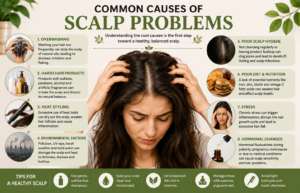 .
.
Benefits of Natural Scalp Care
Natural scalp care focus on the soothing ingredients that feed and not strip the scalp.
The benefits:
- Supports the scalp’s natural barrier
- Maintains healthy oil production
- Reduces irritation
- Improves hydration
- Encourages stronger hair
- Minimizes product buildup
- Promotes healthier-looking hair
Best Natural Oils for Scalp Care
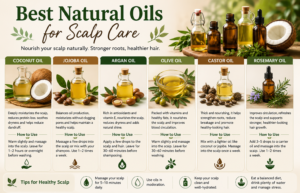
Natural Ingredients That Support Scalp Health
Aloe Vera
Aloe vera is widely used for soothing irritated skin.
Benefits:
- Hydrates the scalp
- Reduces dryness
- Helps calm itchiness
- Provides cooling relief
Massage pure aloe vera to scalp for 20-30 minutes rinse thoroughly in running water.
Tea tree oil
Tea tree oil has a cleansing property. It can cut through oil & flakes. Remember not to use pure essential oils, use it along with any carrier oil.
Rosemary Oil
Rosemary essential oil is commonly used in scalp massage routines.
Benefits:
- Supports scalp circulation
- Refreshes the scalp
- Complements a healthy hair care routine
Never apply undiluted essential oil directly to the scalp.
Honey
Honey is a natural humectant that attracts moisture.
Benefits:
- Hydrates the scalp
- Softens dry patches
- Supports the skin barrier
An apple cider vinegar rinse
When used diluted in water this apple cider vinegar rinse can be very beneficial in washing away any product build-up, while at the same time help your scalp feeling clean and fresh, use the same principle as above and do not over do, just use in a diluted version.
DIY natural scalp treatments
You can also soothe your scalp naturally with effective natural hair care remedies, including botanical oils and DIY scalp treatments.
Aloe vera head mask
Ingredients:
- Fresh aloe vera gel
Apply directly to the scalp.
Leave for 30 minutes.
Rinse with lukewarm water.
Coconut Oil Massage
Ingredients:
- 2 tablespoons warm coconut oil
Massage gently for 5–10 minutes.
Leave for one hour before shampooing.
Choosing the right botanicals is essential for scalp health. Discover the benefits of the best natural hair care ingredients, including aloe vera, tea tree oil, coconut oil, and shea butter.
Honey and Yogurt Mask
Ingredients:
- 2 tablespoons plain yogurt
- 1 tablespoon honey
Apply to the scalp and hair.
Leave for 30 minutes before washing.
Rosemary Oil Blend
Ingredients:
- 2 tablespoons jojoba oil
- 3 drops rosemary essential oil
Massage into your scalp once or twice per week.
For The Perfect Natural Hair Scalp Treatment
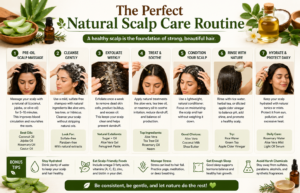
Foods that keep your scalp in tip-top form and glowing
These Foods support scalp health. Nutrition plays a major role in maintaining a healthy scalp.
Protein
Supports hair structure.
Sources:
- Eggs
- Fish
- Beans
- Greek yogurt
Omega-3 Fatty Acids
Help maintain scalp hydration.
Sources:
- Salmon
- Walnuts
- Chia seeds
- Flaxseeds
Iron
Supports oxygen transport.
Foods include:
- Spinach
- Lentils
- Pumpkin seeds
Zinc
Supports healthy skin and scalp.
Sources:
- Pumpkin seeds
- Chickpeas
- Nuts
Vitamin C
Supports collagen production.
Eat:
- Oranges
- Kiwi
- Bell peppers
- Strawberries
Vitamin E
Provides antioxidant support.
Foods:
- Almonds
- Sunflower seeds
- Avocados
Water
Hydration is good for the health of your scalp as well as your hair.
People with textured hair can benefit from our guide to natural hair care for curly hair, which includes scalp-friendly techniques that support healthy curls.
Try and make sure you drink at least eight glasses of water a day.
Habits for Healthier Scalps
Healthy habits create a balanced scalp:
- Sleep
- Exercise
- Manages stress
- diet
- Avoid smoking
- Stay hydrated
- Wash hair after sweating intensely
- Keep comb/brushes clean don’t share hair accessories
Natural Ways to Treat Your Scalp Types
Dry Scalp
Your goal here is moisture.
You want to look for ingredients such as coconut oil aloe vera honey jojoba oil Oily Scalp Lighter ingredients are best here.
If scalp dryness is causing itching or flaking, our guide to natural hair care for dry hair shares practical ways to restore moisture and reduce irritation.
Opt for any of the following:
- Tea tree oil (diluted)
- Aloe vera
- Jojoba oil
- You do not want your oil to build up.
Sensitive Scalp
- Select fragarance-free/gentle products.
- Patch-test new ingredients before use.
Combination Scalp
Cleanse gently while moisturizing only the dry areas.
Seasonal Scalp Care Tips
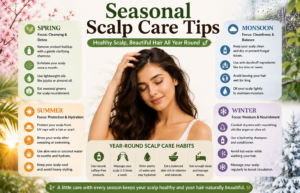
Common Mistakes That Harm Your Scalp
To take care of your hair you should try to avoid these habits:
- Washing your hair with hot water is not a good idea
- Do not scratch the scalp too aggressively it can hurt your scalp
- Using too much dry shampoo is bad for your hair
- You should not apply undiluted essential oils on your hair or scalp
- Overusing styling products can damage your hair so use them carefully
- If you have persistent irritation do not ignore it try to find out what is causing it
- Sleeping with wet hair is not good for your hair it can cause problems
- Skipping regular shampooing is also bad for your hair you should wash your hair regularly
- Using dirty brushes and combs can make your hair dirty so clean them often.
Small improvements in your hair care routine can make a difference, over time so try to make some changes to your hair care routine like avoiding these habits and your hair will be healthier.
Weekly Natural Scalp Care Schedule
| Day | Routine |
| Monday | Gentle shampoo and conditioner |
| Tuesday | Aloe vera scalp treatment |
| Wednesday | Light scalp massage |
| Thursday | Rest day |
| Friday | Warm oil massage |
| Saturday | Mild cleansing if needed |
| Sunday | Rest, Hydrate ,Healthy eat |
Consistency is more the rule than using plethora number of products.
Using high-quality natural hair care products can help remove buildup while maintaining your scalp’s natural moisture balance.
How long until you have a healthy scalp?
Well, everybody and every head will respond differently, but some of you may already begin to see results and can continue using this routine to help promote hair health.
| Time | Expected Results |
| 1–2 weeks | Less dryness and itching |
| 3–4 weeks | Reduced flakes and improved comfort |
| 6–8 weeks | Healthier scalp with less buildup |
| 3 months | Stronger, shinier, healthier-looking hair |
In the long run, healthy hair starts with the scalp There is no magic ingredient or quick fix for optimal hair-growing conditions.
A nourished scalp can help create the ideal environment for stronger hair. Learn more about natural hair care for hair growth with proven tips for supporting healthier strands.
By: Dr. Annie Mateo Tips From Experts to Get to Your Roots Hair Scalp Massage
- Massages to the scalp promote the growth of new blood vessels, thus ensuring the adequate blood supply of the scalp. This, in turn, will provide the roots of the hair with the rightThis is good for your scalp.
- Pick shampoos that’re gentle and do not have sulphates in them.
- You should not put hair products on your scalp unless you really have to do so
- The best way to wash your hair is based on what your scalp needs, not on a set schedule every day.
- Eating foods with lots of protein and good fats and vitamins is very helpful for your scalp.
- Your scalp needs to be safe from much heat and sun
- Get yourself a hairbrush and clean your styling tools often this is important.
- The whole thing to do will be to make sure you’re dealing with your scalp every now and again And to find a full head of healthy hair, you should be a lot more patiently.
-
FAQs
How many times is oil massaged upon hair?
When you have oily skin then it will work enough when you massage oil up to use scalp two to three days per week before you wash the particular head and therefore choose milder essential oils.
Is aloe vera good for taking care of my scalp?
Yes. Aloe vera can help make my scalp feel better by adding moisture reducing dryness soothing any irritation and making my scalp feel more comfortable
Can massaging my scalp help my hair be healthy?
Massaging my scalp may help get more blood flowing and make a place for my hair to grow. While it does not guarantee my hair will grow it can be a part of taking care of my hair
Which oil is best for my scalp?
I can use coconut oil, jojoba oil, olive oil and argan oil on my scalp because they are good natural options, for adding moisture
Should I remove skin from my scalp?
I can gently remove skin from my scalp every two to four weeks to get rid of buildup and dead skin cells. I should not do it much because it can irritate my scalp
What I eat What if I ate a bad diet?
This could potentially cause you dandruff, shedding of excess of your hair, and even stunted growth. Eating a meal full of iron omega3 fats proteins vitamin E, C and drink water can make healthy scalp and stronger hair
Final Thoughts
Natural care of the scalp can help you achieve the beauty and health of your hair. The use of nourishing oils, gentle treatments such as aloe vera and honey, appropriate washing, the right food, and regular health care will contribute to the excellent condition of your scalp, which in turn affects the state of your hair.
To have nice hair you need to take good care of your scalp all the time.
You should pick the products for your skin so it does not get irritated or too dry
Taking care of your scalp and using the products is the key to having healthy hair and beautiful hair.
This way you can have hair that’s not weak and does not have split ends
You need to remember that taking care of your scalp is important, for having hair.