
 GoBeauty Bay
  Shaista Rafi
Beauty & Lifestyle Content Writer
in
Shaista Rafi writes reader-focused beauty
and lifestyle content for GoBeautyBay,
covering skincare, hair care, makeup,
personal care and everyday beauty topics.
Shaista Rafi
Beauty & Lifestyle Content Writer
in
Shaista Rafi writes reader-focused beauty
and lifestyle content for GoBeautyBay,
covering skincare, hair care, makeup,
personal care and everyday beauty topics.
 Mirza Ibrahim Ali Khan
Editorial Reviewer
in
Mirza Ibrahim Ali Khan contributes to
GoBeautyBay's editorial review process,
focusing on clarity, content structure,
topical relevance and reader usefulness.
Mirza Ibrahim Ali Khan
Editorial Reviewer
in
Mirza Ibrahim Ali Khan contributes to
GoBeautyBay's editorial review process,
focusing on clarity, content structure,
topical relevance and reader usefulness.
When assessing possible reasons for premature skin aging the first and possibly the greatest culprit to be taken into consideration is the effects of sun exposure. Certainly, a natural amount of skin change will occur as a person ages, yet multiple occurrences of over exposure to the ultraviolet radiation that the sun naturally emanates will accelerate visible changes like wrinkling, uneven skin coloration, coarsening skin, and laxity (a lack of tone). The better news is that sun protection doesn’t need to be difficult. In addition to wearing sunscreen daily, some form of clothing covering your skin and keeping in the shade can help minimize unnecessary exposure to the sun.
What Is Premature Skin Aging?
Premature skin aging, also referred to photoaging, represents visible skin aging signs accelerated by the environment including solar radiation, or UV. Photoaging varies significantly in an “external aging” sense by comparing chronological aging. Visible signs include lines, pigmentation changes, wrinkles, reduced skin elasticity, dull appearing skin, loose skin and leathery texture.
Apart from solar exposure other environment variables include; pollution in the air, smoking, lack of sleep etc.
It varies depending on a persons’ lifestyle. UV rays are still the prime preventable contributor.
How Does UV Radiation Age the Skin?
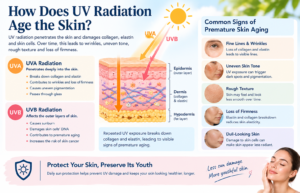
There are two types of UV radiation found within the spectrum of sunlight – UVA and UVB. These have a slightly different effect upon the skin:
UVA Radiation
UVA rays penetrate the dermis of your skin and can contribute to the photo ageing of your skin. Collagen and Elastin provide the strength and support in the skin keeping it tight, but continuous long-term UVA exposure influences collagen and elastin, thus resulting in the gradual formation of the following over long-term exposure:
- Wrinkles
- lose skin
- Irregular pigmentation
- Texture of skin varies
UVA rays can penetrate glass so protection is needed even if you may not be directly in the sun:
UVB Radiation
UVB rays contribute significantly more to the damage seen on the epidermis and have a more immediate damaging effect upon your DNA. Repeated exposure can still result in premature ageing of the skin. Prolonged exposure to UVA and UVB may increase risk of skin cancer.
It is important that both UVA and UVB are used when providing a shield from radiation as broad-spectrum sun protection agents will protect from UVA and UVB
Why Sunscreen Is Essential for Anti-Aging Skincare
While many anti-aging products are designed to better the existing skin conditions, Sunscreen is an entirely different case, that serves as one the main providers in protecting against one of the causes, to which they arise.
Regular protection can prevent continued UV damaging effects, where are some reasons in visible aging; An uncomplicated routine for example might comprise of:
AM – Mild cleanser; Antioxidant Serum; Moisturizer; broad-spectrum Sunscreen,
PM – Cleanser; Treatment Ingredient; Moisturizing Serum; Moisturizer.
However, even the most elaborate of skincare routines cannot undo the damage brought by lack of protection
What SPF Should You Use?
Choose a broad-spectrum sunscreen with at least SPF 30 for daily use.
SPF refers only to how well it protects against UV B (which cause sunburn). A broad-spectrum sunscreen protects against UV B and UV A rays as well.
When looking for sunscreen it is important to remember to look for a:
- Broad-spectrum UVA and UV B protection With an SPF of at least 30
- One you will find you want to wear every day (a good texture etc.)
- Water resistant sunscreen if swimming, sweating or will be on for a while after activities such as swimming.
- One that doesn’t interfere with any foundation or base makeup you are trying to put on.
Really the best kind of sunscreen, if one must choose one to use, would be one which someone gets the benefit of using a good amount of and application regularly.
How Much Sunscreen Should You Apply?
Applying less product then suggested on the sunscreen labelling could decrease the protection level on the packaging.
It seems like a logical method is to apply as much sunscreen to the face as needed for complete coverage. Common people like to suggest a two-finger length test which works best on applying sunscreen evenly throughout the face and neck. Every product also covers the body at different rate, and your size also affects.
Remember to check commonly overlooked areas such as:
- Ears
- Neck
- Hairline
- Toes and feet
- Hands
- Chest and all areas that is still uncovered.
All exposed areas need to cover up with sunscreen on the labelling instruction.
When Should You Apply Sunscreen?
In the morning your SPF should generally be the last step of your routine before any makeup you wear, it should always be applied before you are outdoors following any application instructions on your SPF and you will need to re-apply most likely for the entirety that you are outdoors. Swimming, sweating and towel dried activities will also break up the SPF application and may be subject to reapplication. The amount that your SPF needs to be re-applied will certainly differ between an afternoon spent completely indoors and one spent outside.
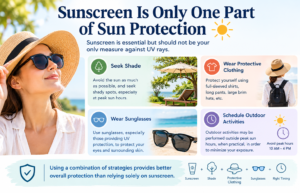
Sunscreen Is Only One Part of Sun Protection
Sunscreen is essential but should not be your only measure against UV rays.
Antioxidants and Sun Protection
These are two common antioxidants that appear in many skincare regimens due to their effects on oxidative stress. Vitamin C is a particularly popular morning anti-aging ingredient due to its antioxidant benefits as well as brightening properties. However, an antioxidant-based product shouldn’t be used in lieu of sunscreen; rather, an antioxidant and broad-spectrum sunscreen can be used simultaneously in a successful morning regimen.
Does Sun Protection Help Prevent Dark Spots?
Yes, that is a crucial part of any uneven pigmentation issue-consistent sun protection is essential can further the damage from existing dark spots and can create new ones. If you’re employing a mix of actives such as Vitamin C, niacinamide, retinoids, or exfoliative acids to address this then the sun’s damaging rays can and will undermine your results. For significant or long-lasting pigmentation, a doctor may be able to offer advice on root cause and best treatment.
Common Sun-Protection Mistakes
If you use sunscreen regularly, it’s possible to unknowingly decrease its effectiveness through errors:
- Over-thin application of sunscreen
- Forgetting ears, neck and behind knees
- Forgoing the use of sunscreen on overcast days
- Never reaching for it unless you’re at the beach
- The omission of reapplication after extensive periods outdoors
- Not using sunscreen in conjunction with shade and clothing
- Hands or other exposed areas are neglected
- Expired or misused sunscreen
It’s the application of, and not the type and variety of products that actually count:
Sun Protection for Different Skin Types
For all skin types, wearing sunscreen is important.
- Dry skin: Moisturising sunscreens could help with dry skin.
- Oily or combination skin: A non-greasy light formulated sunscreen could feel better.
- Sensitive skin: Hypoallergenic or mineral sunscreens might be useful depending on what makes you sensitive.
- Darker skin types: Sunscreens are still important as everyone’s skin tone doesn’t mean your skin is fully protected against UV rays which could lead to dark patches and photo skin aging.
It needs to be something comfortable, so it should slot into your daily routine so you’ll use the sunscreen every day.
A Simple Daily Sun-Protection Routine
An anti-aging regimen that works doesn’t have to be complicated.
Each morning:
- Gentle cleansing if necessary
- Applying topical antioxidants if used.
- Moisturizing depending on skin’s requirements.
- Use a broad-spectrum SPF 30 or higher.
- Bring long-sleeved shirt, sunglasses and/or hat when you are going outside.
Prolonged Sun Exposure:
Use sunscreen as needed (particularly after sweating, water exposure and toweling)-seek shade and mechanical cover.
Final Thoughts
Sun protection is closely linked with premature aging. Skin that is constantly exposed to the sun will experience increased pigmentation, wrinkling, dull skin and reduced firmness so protecting yourself is the most important element of your anti-aging routine.
Think of protection in terms of; SPF application throughout the day, UV protective clothing, hats and sunglasses, taking shelter during peak times and generally avoiding unnecessary, unprotected exposure in the sun. Once you have that covered you can layer up ingredients like Retinoids, Vit C, Niacinamide, Hyaluronic acid, peptides, ceramides around this.
You aren’t looking to stop the natural aging process; you’re just trying to support your skins barrier function and keep a healthy appearance to the skin for longer.