
 GoBeauty Bay
  Shaista Rafi
Beauty & Lifestyle Content Writer
in
Shaista Rafi writes reader-focused beauty
and lifestyle content for GoBeautyBay,
covering skincare, hair care, makeup,
personal care and everyday beauty topics.
Shaista Rafi
Beauty & Lifestyle Content Writer
in
Shaista Rafi writes reader-focused beauty
and lifestyle content for GoBeautyBay,
covering skincare, hair care, makeup,
personal care and everyday beauty topics.
 Mirza Ibrahim Ali Khan
Editorial Reviewer
in
Mirza Ibrahim Ali Khan contributes to
GoBeautyBay's editorial review process,
focusing on clarity, content structure,
topical relevance and reader usefulness.
Mirza Ibrahim Ali Khan
Editorial Reviewer
in
Mirza Ibrahim Ali Khan contributes to
GoBeautyBay's editorial review process,
focusing on clarity, content structure,
topical relevance and reader usefulness.
Choosing the perfect foundation is all about your skin
Whether you wear makeup on a day-to-day basis or only put it on for special events-foundation is arguably one of the major decisions you have to take in your makeup bag. And though picking out the correct shade does constitute a major part, it’s ultimately the texture and formula of foundation you pick out that’ll truly matter for its smoothness and staying power. A good foundation enhances your face, rather than hiding it away! If you have ever realized that a foundation works brilliantly for one friend but not so great for you on certain days-then it might be all to do with the different types of skin you may or may not possess. Every type of skin can however be nurtured with the right kind of products and a bit of ingenuity. Just read ahead to pick out the one made specifically for you!
-
For dry skin
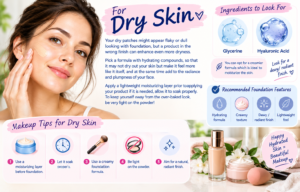
Your dry patches might appear flaky or dull looking with foundation, but a product in the wrong finish can enhance even more dryness. Pick a formula with hydrating compounds, so that it may not dry out your skin but make it feel more like it itself, and at the same time add to the radiance and plumpness of your face. Apply a lightweight moisturizing layer prior to applying your product if it is needed, allow it to soak properly. To keep yourself away from the over-baked look, be very light on the powder!
Ingredients you can look out for: glycerine, hyaluronic acid. You can opt for a creamier formula which is ideal to moisturize the skin. Look for a dewy/ radiant finish.
-
For oily skin
If your face is oily, even after cleaning your face, the excess oils make you shine throughout the day, even after foundation, we can address this with oil-controlling products or matte formulas which leave your skin with a shine-free look. If you hate cakey formulas, this lightweight foundation may be ideal for you! It absorbs oil while you go about your busy day, making it feel smooth and natural. Using oil-free or mattifying skin prep prior to makeup application would be an effective addition.
What ingredients to look for: Mattifying or oil-free formulas. A natural or matte finish.
3.For Combination Skin
Whether you have the combination between oily and dry skin types, you’ll find some areas where the T-zone can appear oily or even shining, but others like cheeks might feel dry. The product should ideally cater to all these differing areas simultaneously. Try to choose a product that is light enough to complement dry areas but matte enough to work wonders on oily parts without making them shine more.
If you don’t want to add a heavy amount of product to your face and want to apply more makeup to certain areas, it can be helpful to focus on specific zones.
This way your dry zones do not get stripped while oily ones does not turn more shiney.
The right kind of approach will vary between each person. Apply moisturizer to Dry zones with, or where they start appearing patchy. Add powder to areas where excessive shine might erupt throughout the day. Apply thin layer of your preferred formula, apply more to patches where coverage needed.
4. For Sensitive Skin
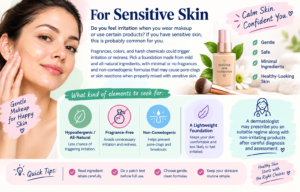
Feel irritation each time you try a new makeup or a product? It happens every time that you are with sensitive skin, this type of condition would be usual. The fragrances, colors, potent ingredients could make you react either redness or irritation. Select a natural based foundation containing mild all-natural ingredients, least or even no fragrance, non-comedogenic which could be a catalyst for blockages or reactions if mixed up right with your sensitive skin properly.
What kind of factors are you looking for. Hypoallergenic/ all-natural, fragrance-free, and most non-comedogenic possible. Lightweight foundation is more than suitable as this will keep you further away from reactions. A dermatologist may direct you for an apt regime and irritant-free products if you consult after being properly diagnosed
5.For Mature Skin
When skin loses collagen/ firmness/ elasticity, fine lines are formed around the pores that appear as enlarged pores. The elasticity of the skin diminishes and dry patches form with dryness. A heavier foundation could settle into fine lines and emphasize wrinkles and dryness while matte foundations may make your skin look dull and tired.
- To make sure that you still let your skin show its natural radiance, it can be extremely beneficial to select foundations with natural/ satin finishes that look and feel as if your second skin.
- To be hydrated, your foundation product requires to be lightweight with buildable coverage.
- You can try to choose a formula which is hydrating/ liquid. Lightweight buildable coverage which can adjust its application based on areas you need cover. Look forradiant/ satin finish.
- Make sure it is gentle on the skin.
Apply sunscreen as well as moisturizer before foundation layer, they’re essential to make makeup look smoother and even after application! If this is something that happens to you throughout the day, a good moisturizing serum and a water-based moisturiser before foundation application can be quite good for sensitive and mature skin.
Understanding Foundation finishes
Understanding Foundation finish types: Foundation formulations may differ in their effects once applied to the skin.
Matte
Matte finishes eliminate all signs of shine and may be a perfect choice for people who prefer a shine-free look. Matte foundation makes your makeup looks matte and has zero-viscous texture
Dewy
Dewy finishes help to achieve a radiant, plump-looking look.
Matte foundations don’t give much shine whereas Dewy Foundation finishes make your skin a healthy glow. This finish looks perfectly healthy and as though you don’t really wear a lot of makeup, but at the same time helps with dry skin type.
Natural/ satin
Satin finishing is the finish that the finish comes halfway from dewy and matte. It will appear natural and healthy, and this finishing would look excellent on all kinds of skin.
Selecting Foundation Coverage Level
The level of Coverage the foundation you select will also affect how it looks on your skin.
- Sheer: Sheer means minimal color, providing just a hint of evenness.
- Medium: Medium Coverage means a little more colour with some ability to even skin tone while allowing the majority of the skin to show through.
- Full: Full Coverage means maximum opacity, with significant improvement to areas of discoloration and dullness. Sometimes applying a full coverage to the whole face may over do the makeup. A medium cover would still have your natural skin show through beautifully.
The choice you make depends on your individual preference. A few sheer layers will never overdo makeup application and could produce as natural results than one thick application of Full cover product, mixed with lighter cover in the other areas!
Don’t forget the skin prep
To help foundation go on evenly and look more natural, skin prep before makeup foundation may consist of: Cleans your face gently. Apply Moisturizer in accord with your skin type. Apply sunscreen.Let the applied moisturizer set before applying the foundation product as your Makeup Base. Apply your foundation product.
In conclusion:
Choosing a Foundation Based on Your skin: A matte finish for oily skins, radiant finishes for dry skins, balanced finishes forCombination skins, mild/natural formula for sensitive skins and lightweight liquid formulasfor mature skins, these tips should help you pick the perfect foundation to suit your needs. A word of encouragement, your skin type might even change! If you find you need to alter makeup throughout the years you’ll always be able to update your routine! Remember, that goal is not simply covering up your skin, rather enhancing your complexion to feel even more glamorous while allowing natural traits to stand out as your own.