
 GoBeauty Bay
  Shaista Rafi
Beauty & Lifestyle Content Writer
in
Shaista Rafi writes reader-focused beauty
and lifestyle content for GoBeautyBay,
covering skincare, hair care, makeup,
personal care and everyday beauty topics.
Shaista Rafi
Beauty & Lifestyle Content Writer
in
Shaista Rafi writes reader-focused beauty
and lifestyle content for GoBeautyBay,
covering skincare, hair care, makeup,
personal care and everyday beauty topics.
 Mirza Ibrahim Ali Khan
Editorial Reviewer
in
Mirza Ibrahim Ali Khan contributes to
GoBeautyBay's editorial review process,
focusing on clarity, content structure,
topical relevance and reader usefulness.
Mirza Ibrahim Ali Khan
Editorial Reviewer
in
Mirza Ibrahim Ali Khan contributes to
GoBeautyBay's editorial review process,
focusing on clarity, content structure,
topical relevance and reader usefulness.
A beautiful foundation application is not about picking the right shade. How you get ready your skin put the product on choose your tools and add coverage can have as much effect on the outcome.
Whether you like a light everyday look or a polished full coverage style the main aim is usually the same: to get a skin tone while your natural skin still looks like skin.
The right way to apply depends on the foundation type. Liquid, powder, cream, stick, serum and mousse foundations can act differently so changing how you apply them can make a difference.
Start With Skin Preparation
 Choose the Right Foundation Shade
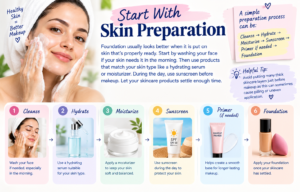 Choose the Right Foundation Shade
Good application methods can’t fix a foundation shade that is too wrong.
When picking a shade think about your skin tone and your undertone.
Common undertones are:
- Warm
- Cool
- Neutral
- Olive
If you can test the foundation on an area that gives you an idea of how the shade blends in. The jawline can help because it lets you compare the face with the neck.
Let the product settle before you decide especially if the formula tends to change color.
Use the Right Amount
One of the common foundation mistakes is putting on too much product right away.
Instead start with a little. Add coverage slowly.
Start in the middle of the face, where redness or color changes might be more visible and spread out.
This way the outer parts of the face stay lighter giving a natural look.
Remember: You can always add foundation. Removing the extra is much harder.
Foundation Application With a Brush
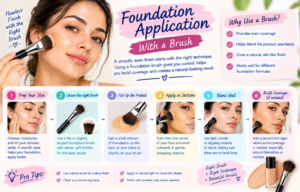
A foundation brush can give controlled application.
For cream foundation put a small amount on the back of your hand or a clean palette. Take a little with your brush. Put it on the center of your face.
Use strokes or pressing motions depending on the foundation and brush type.
Brush Technique
- Put an amount on the cheeks, forehead, nose and chin.
- Spread out towards the edges of the face.
- Use movements around the nose and eyes.
- Check the jawline and hairline carefully.
- Add a layer where more coverage is needed.
Don’t rub the foundation into the skin hard as this can create lines or mix with the skincare underneath.
Foundation Application With a Makeup Sponge
A wet makeup sponge can give a blended look.
Of dragging the sponge across the skin use a pressing or bouncing motion to spread the foundation.
This method is especially good if you want a smooth look.
Sponge Technique
- Put an amount of foundation on the face.
- Wet the sponge. Squeeze out the extra water.
- Press the foundation gently into the skin.
- Add coverage in layers.
- Use the end for the nose and other small areas.
Don’t make the sponge too wet. Much water can change the product and the finish.
Applying Foundation With Your Fingers
Your fingers can also work well with light liquid or serum foundations.
The warmth of your fingers can help spread the product especially with a thin formula.
Put an amount on your fingers spread it across the face and gently blend.
Always make sure your hands are clean before using this method.
How to Build Foundation Coverage
If you want coverage don’t put a thick layer over the whole face.
Instead use a layering method.
Put one layer and let it settle. Then add a little more to areas that need coverage.
These areas might include:
- Around the nose
- Redness on the cheeks
- Dark spots
- Areas with color
- Occasional blemishes
This way you get a look without making the whole face look covered.
How to Apply Powder Foundation
Powder foundation needs a different way.
For coverage use a fluffy brush and lightly sweep or press the powder on the skin.
For coverage a denser brush or sponge can give more color.
Avoid putting powder on areas that’re already dry or rough as extra product can make those areas stand out.
If you have skin focus the powder on areas where you get shiny instead of putting a heavy layer all over.
How to Apply Stick Foundation
Stick foundation can be put directly on the skin. Picked up with a brush or sponge.
Of drawing thick lines across the face put a few small strokes in the right places.
Then blend the product out.
Stick foundation can also be good for covering areas because you can put it only where you need extra color.
Foundation for a Natural Makeup Look
For a natural look focus on using less product instead of trying to cover everything.
A natural foundation method includes:
- Prepare the skin properly.
- Use an buildable foundation.
- Put on a layer.
- Blend out.
- Add coverage where needed.
- Leave some skin visible.
- Set the areas that need it.
This gives a finish that looks good without looking too done.
Foundation for Full Coverage
Full coverage doesn’t mean putting a layer of foundation.
Instead use layers and focus on the right places.
Start with a foundation that gives the coverage you want put a layer on the face and add more where needed.
A concealer can sometimes be better than adding foundation all over.
How to Prevent Foundation From Looking Cakey
Caky foundation can come from much product, wrong skincare, dryness or too much powder.
To help stop it:
- Moisturize before makeup.
- Use an amount of foundation.
- Add coverage slowly.
- Blend the hairline and jawline.
- Don’t use much powder.
- Choose a finish that fits your skin.
- Let skincare settle.
- Remove product from areas that have buildup.
If foundation keeps making texture obvious think about the formula and your skincare routine.
Foundation Around the Nose and Eyes
The nose and the areas around the eyes can be hard because they have texture, movement and natural creases.
Use an amount of product in these areas.
A small brush or the tip of a makeup sponge can give control.
After blending check for product in creases. Remove extra before setting.
Setting Your Foundation
Whether you need setting powder depends on your foundation, your skin type, the finish you want and the weather.
Oily skin can benefit from powder in the areas while dry skin might look better with little powder.
Apply powder where you need to control shine or stop makeup from moving.
For a glowing look use a setting spray as the product says.
Foundation Application Mistakes to Avoid
Some mistakes are:
- Picking the shade
- Putting on too much product
- Skipping skin preparation
- Using makeup tools
- Putting thick layers everywhere
- Forgetting the jawline and hairline
- Using much powder on dry areas
- Using the same method for every foundation type
- Rubbing instead of gently blending
- Not considering how the foundation works with skincare
Cleaning brushes and sponges regularly is important for keeping makeup clean.
Final Thoughts
Good foundation application is about balance. The aim is to out the skin tone while making the result feel comfortable and natural.
Start with skin preparation choose the right shade and formula and apply a little at a time, before building coverage where needed. Brushes, sponges and fingers can all work—the best one depends on the formula. Look you want.
Importantly don’t think that perfect makeup means completely covering your skin. With the method foundation can make your face look better while still letting your skin look like skin.
This guide is the ideal connection between your ‘Types of Foundation makeup’, ‘Foundation Makeup’ and ‘How to prepare your skin before foundation’ pages, perfect for the beginner.