
 GoBeauty Bay
 Shaista Rafi
Beauty & Lifestyle Content Writer
in
Shaista Rafi writes reader-focused beauty
and lifestyle content for GoBeautyBay,
covering skincare, hair care, makeup,
personal care and everyday beauty topics.
 Mirza Ibrahim Ali Khan
Editorial Reviewer
in
Mirza Ibrahim Ali Khan contributes to
GoBeautyBay's editorial review process,
focusing on clarity, content structure,
topical relevance and reader usefulness.
Many of the usual vitamins in the spotlight are related to skincare – and there are very good reasons. The water-soluble vitamin is not only crucial in building collagen and combating radical damage, but it also packs a punch in skincare products for improving the appearance of age spots, dull or uneven skin tone, and generally the appearance of aging.
What are the benefits of vitamin C for skin?
Vitamin C aids in the production of collagen and has skin cell protection against oxidative stress Vitamin C in skin care
Topical vitamin C is generally employed for its skin brightening properties. The American Academy of Dermatology has listed vitamin C as one of the skin care ingredients that have been backed by scientific research to reduce signs of aging and hyperpigmentation.
What Is Vitamin C?
Vitamin C (also known as ascorbic acid) is a vitamin that we need to get through diet or supplements as our body doesn’t produce it.
What does your body need vitamin C for collagen It is also a powerful antioxidant that acts as a shield protecting your body against damage caused by radicals.
Where is vitamin c? Vitamin C occurs naturally in citrus fruit like lemons and oranges, berries such as strawberries and kiwi, plus broccoli, tomatoes, potatoes and bell peppers.
Understanding skincare myths, when is vitamin C different than topical vitamin C? People like to know, when it comes to skin, what’s the difference between vitamin C versus topical vitamin C?
Vitamin C Benefits for Skin
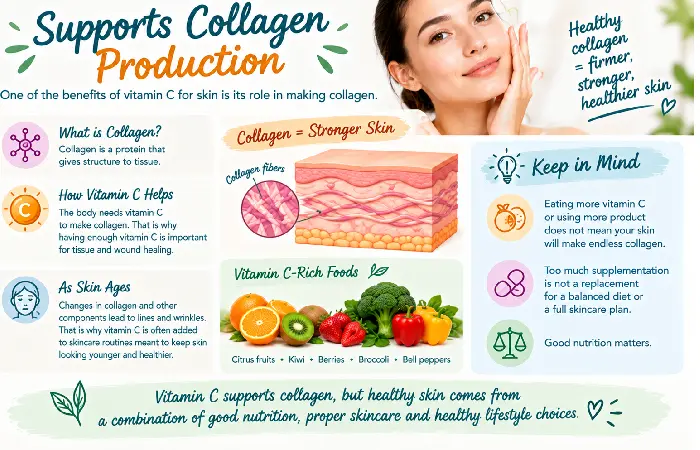
1. Supports Collagen Production
2. Provides Antioxidant Protection
Vitamin C is an antioxidant.
The body deals with radicals every day. These come from body functions and things in the environment—like air pollution, cigarette smoke and UV rays. Antioxidants help protect cells from damage.
This is why vitamin C is so common in serums.
A topical vitamin C product can support a routine focused on protecting skin from stress.. It should not be seen as a substitute for sunscreen.
3. Helps Improve the Appearance of Dark Spots
Vitamin C is often used in skincare to treat skin tone and dark spots.
The American Academy of Dermatology lists vitamin C among ingredients that may help fade spots.
Dark spots can come from things—like acne, skin irritation, hormones, injuries or sun exposure. Treating the root cause is key.
For example if a skincare product is causing irritation adding more brightening products might make things worse. Gentle skin care and good sun protection are parts of treating pigmentation.
Can Help Brighten Dull-Looking Skin
Vitamin C is often used in brightening routines because it can improve the look of skin tone.
A vitamin C serum may be helpful if your concerns include:
- looking skin
- Uneven skin tone
- Dark spots
- Post-acne marks
- Signs of sun damage
The goal is a more even skin tone not changing your natural skin color.
5. Supports Skin During the Aging Process
Vitamin C is often included in -aging skincare because of its antioxidant effects and its role in collagen production.
The AAD recommends vitamin C as one of ingredients backed by science that can help with aging signs and dark spots.
A full anti-aging routine should not rely on vitamin C. Daily sunscreen, moisturizing, gentle cleansing and other active ingredients also play important roles.
Vitamin C Serum Benefits for Skin
Topical vitamin C comes in forms:
- Serums
- Creams
- Lotions
- Moisturizers
- Treatments
Different products use forms of vitamin C. L-ascorbic acid is the most well-known. Others use vitamin C derivatives.
When choosing a serum look beyond the percentage on the bottle. The overall formula, how the product is packaged how stable it is and what other ingredients are in it can all affect how it works.
If your skin is sensitive start slowly. Use vitamin C often at first to see how it feels.
How to Use Vitamin C for Skin
A simple morning routine could be:
Step 1: wash your face.
Step 2: Apply your vitamin C serum.
Step 3: Use moisturizer if needed.
Step 4: Finish with broad-spectrum sunscreen.
One to remember: According to the American Academy of Dermatology, vitamin C should be applied after cleansing your face but before sunscreen.
Sunscreen is still very important. UV rays can cause spots and aging. For people with pigmentation dermatologists say sun protection is the base of treatment.
Vitamin C-Rich Foods for Healthy Skin
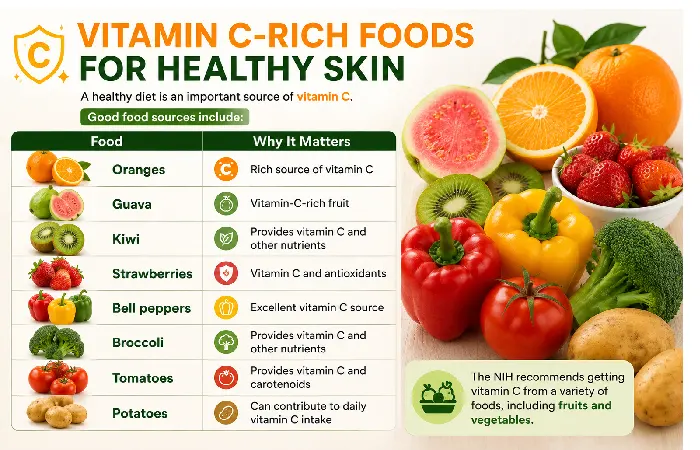
Some foods in vitamin C include:
- Oranges
- Lemons
- Strawberries
- Kiwi
- Bell peppers
- Broccoli
- Tomatoes
- Potatoes
Eating these foods helps support health and can help your skin from the inside.
Vitamin C Supplements for Skin: Are They Necessary?
Taking a vitamin C supplement does not automatically mean looking skin.
Most people should get their nutrients from a variety of foods. Supplements may be useful in some cases. Taking high doses just for skin benefits is not always helpful.
The National Institutes of Health lists a limit of 2,000 mg of vitamin C per day for adults. That includes food and supplements. Too much can cause diarrhea, nausea and stomach cramps.
So do not think more means better. A higher dose does not always lead to skin.
Vitamin C and Sensitive Skin
Vitamin C products can work well for people.. Some formulas may cause stinging, dryness or irritation.
If your skin is sensitive:
- Start with using the product often.
- Add one active at a time.
- Avoid using potentially irritating products at once.
- Use moisturizer regularly.
- Stop using a product if you get irritation.
- Pick products made for your skin type.
Skin irritation can sometimes lead to pigmentation. So aggressive skincare is not always better for spots.
Vitamin C vs. Skincare Vitamins
Vitamin C is not the only vitamin that is used in skincare.
Vitamin A, Retinoids: This is typically used for acne, wrinkles, fine lines, discoloration, and uneven texture.
Oxidizing: Vitamin E. This is an antioxidant that you usually see in skin care.
Vit B3, Niacinamide – an essential for supporting uneven tone and the skin barrier.
Select your ingredient by your skin concern-not just the most promoted.
Frequently Asked Questions
Is vitamin C good, for skin?
Yes. Vitamin C is a nutrient that helps make collagen and protects skin from damage. Topical vitamin C is often used to improve spots, uneven tone and signs of aging.
Can vitamin C remove spots?
Vitamin C could be a tool for fading spots, but its effectiveness may vary depending on the cause, and depth, of the discoloration. Avoiding the sun is an essential part of any dark spot treatment routine.
Can I use vitamin C every day?
A lot of people take their vitamin C in the mornings. However, if you’ve got sensitive skin, then it is best to ease into using it.
Does vitamin C have to be taken at night or in the morning?
Vitamin C is best used in the morning after you’ve washed your face and pre-makeup and sunscreen application.
Does vitamin C brighten skin?
Topical vitamin C can help improve skin tone and reduce the look of dark spots. When we talk about “brightening ” it means making dullness or discoloration noticeable— not changing your natural skin color.
Is vitamin C good for acne?
Vitamin C isn’t a treatment for active acne, but it might help with post-acne dark marks. For serious acne stronger treatments proven to work should be used.
Can I use vitamin C with sunscreen?
Yes. Vitamin C and sunscreen do things. You can safely use both together. Vitamin C does not replace sunscreen.
Conclusion Tips on Vitamin C Skin Benefits
Vitamin C and skin: The inside story and the outside story Vitamin C benefits your skin both from the inside and the outside. Inside, your body uses vitamin C to produce collagen and as an antioxidant. On the skin it can help reduce the appearance of spots, signs of aging, dullness and uneven texture.
For people taking very high amounts of vitamin C supplements isn’t necessary. A better approach is to eat a variety of fruits and vegetables use a quality topical vitamin C product if your skin responds well keep your skin moisturized and always protect your skin from ultraviolet rays.
Vitamin C can be useful, in a skincare routine. Consistent sun protection and a simple gentle routine are still the most important parts of keeping your skin healthy over time.