
 GoBeauty Bay
 Shaista Rafi
Beauty & Lifestyle Content Writer
in
Shaista Rafi writes reader-focused beauty
and lifestyle content for GoBeautyBay,
covering skincare, hair care, makeup,
personal care and everyday beauty topics.
 Mirza Ibrahim Ali Khan
Editorial Reviewer
in
Mirza Ibrahim Ali Khan contributes to
GoBeautyBay's editorial review process,
focusing on clarity, content structure,
topical relevance and reader usefulness.
It takes more than just good skincare to have healthy skin Nutrients in our body also affect the health of our skin and obviously our whole body, including (more specifically) nutrition, hydration, protection from the sun, rest, hormones, genetics and general health, including the ways in which the skin functions. In terms of nutrients we need vitamins, they perform many essential functions in the skin. So which vitamin is good for skin?
There isn’t one vitamin that’s the best for everyone. Different vitamins do things. Each one has a part to play. Vitamins A B vitamins, C, D and E all contribute in ways. Some of these vitamins are used directly in skincare products like vitamin C. Vitamin A derivatives such as retinoids. These have backing for helping skin.
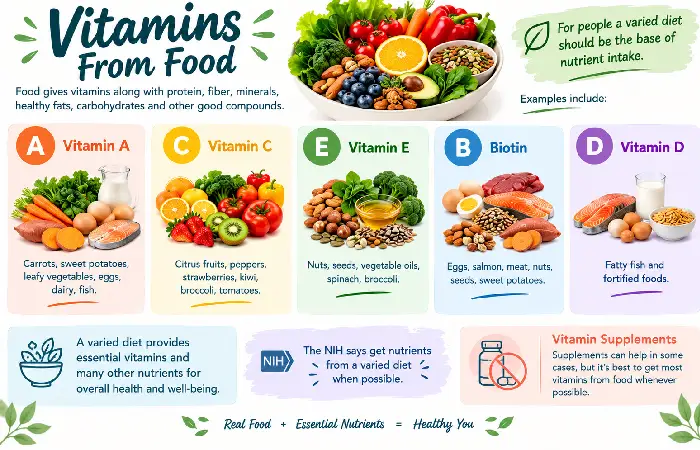
Best food source for your vitamins Obviously, then, eating the vitamins is far preferable than taking a supplement. You get higher bioavailability from food, and it’s unlikely that you’ll have the side-effects associated with taking too high a dose of supplements. Vitamin C can make collagen to slow (or prevent) skin cells from becoming damaged by radicals.
Vitamin A is the alpha and omega for skin cell growth (it is also the basis for most retinoid-based products).
Vitamin E is an antioxidant to defend your skin from stress. Vitamin D is good for you, although it is best to get some protection for sun damage.
This guide covers which vitamins may help with skin concerns. It explains how to get them from food when using vitamins makes sense and what to think about before starting supplements.
Which Vitamin Is Good for Skin?
The main idea is that good nutrition is more important than taking amounts. If someone already gets enough of a vitamin taking more does not automatically make the skin look better. This is especially true for “beauty supplements,” which might have amounts than the body needs.
Vitamin A for Skin
How Vitamin A Helps the Skin
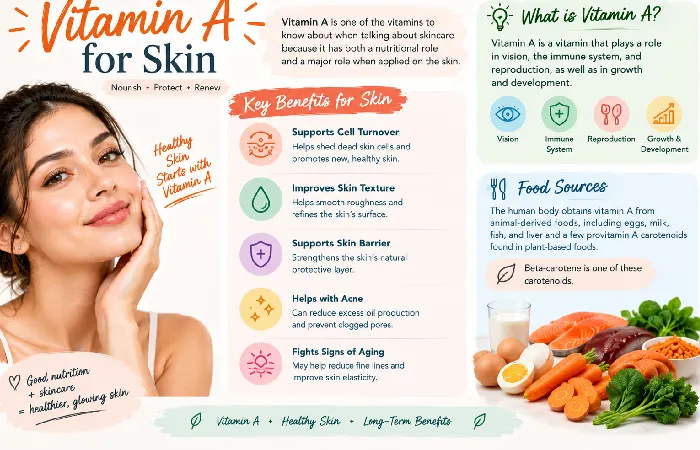
Enough vitamin A is needed for cell growth and development. Since skin is always renewing itself having enough vitamin A is part of keeping the skin working.
The connection between the vitamin A in food and the topical retinoids needs to be clear.
Vitamin A from food helps with health.
Topical retinoids are vitamin A products that are meant to be applied to the skin.
Acne, Wrinkles & Darkness Some dermatologists prescribe retinoids for treatment of conditions such as acne, fine lines, wrinkles, dark spots and dull, uneven skin tone. The American Academy of Dermatology notes that retinoids can clear blocked pores, improve texture and combat visible signs of aging.
Retinol vs. Vitamin A
Retinol is a type of vitamin A used in skincare. Other retinoids include medicines like tretinoin and tazarotene.
Retinoids can work well. May also cause dryness, redness, peeling or irritation especially if used quickly. Doctors often tell people to start and let the skin adjust.
A beginner might want to start with a low-strength retinol product and use it often of using a strong product every night right away.
Sources of Vitamin A in Food
sources include:
- Eggs
- Dairy products
- Fish
- Liver
- Carrots
- Sweet potatoes
- Spinach
- Other dark green vegetables
- Orange and yellow fruits and vegetables
Vitamin A Safety
More vitamin A is not always better.
Much preformed vitamin A can be dangerous when high-dose supplements are taken without a doctor’s advice. Some vitamin A-based medicines also have safety concerns.
For example, people on isotretinoin should not take vitamin A supplements unless told to by a doctor. The American Academy of Dermatology also says to avoid using retinol on the skin during isotretinoin treatment because the skin may be very sensitive.
Vitamin B for Skin
The B-vitamin group includes nutrients, so it is better to talk about B vitamins rather than treating them as one.
B vitamins help the body change food into energy and take part in cell activities. Different B vitamins have roles. Lacking them can sometimes affect the skin.
Key B vitamins are:
- Vitamin B1 or thiamin
- Vitamin B2 or riboflavin
- Vitamin B3 or niacin
- Vitamin B5 or pantothenic acid
- Vitamin B6
- Vitamin B7 or biotin
- Vitamin B9 or folate
- Vitamin B12
Is Biotin Good for Skin?
Biotin is probably the B vitamin often advertised for skin, hair and nails.
It is important for the chemical process that converts carbs, fats, and proteins into energy It is present in eggs, fish, meat, nuts, seeds, sweet potatoes, spinach, and broccoli.
A real biotin deficiency can cause skin problems, hair loss and weak nails. Biotin deficiency is rare in people who’re otherwise healthy and there is not much proof that extra biotin helps the skin of people who already get enough.
That is a point.
If someone is lacking fixing the lack can help.
If someone already has biotin taking a lot more does not necessarily make the skin clearer or more shiny.
Biotin Supplements and Testing
High-dose biotin supplements can mess up some lab tests. May give wrong results. This can include tests for hormones and other blood levels.
So always let your doctor or lab person know if you are taking a high-dose biotin supplement.
Vitamin B3 and Skin
Vitamin B3 also called niacin is another B vitamin with a link to skincare.
A form called niacinamide is used in skincare products. It is different from taking a B3 supplement. Niacinamide is in serums, lotions and other skin products.
Depending on the formula and strength niacinamide products are often used to help with skin tone, extra oil and the skin barrier.
The key point is that topical niacinamide should not be mixed up with taking dose vitamin B3.
Vitamin C for Skin
Vitamin C, one of the most studied and the best vitamin for skin care.
It is a water-soluble nutrient and antioxidant that vitamin C that the body needs. Vitamin C is needed to make collagen which a type of protein, and it is beneficial to repair and prevent tissue damage.
Vitamin C Benefits for Skin
Some people may find the following benefits of vitamin C to be particularly important:
- Skin that looks
- Skin that’s not even in color
- Dark spots
- Signs of skin aging from sun
- A dull look on the face
The American Academy of Dermatology says vitamin C products can help reduce the look of aging and dark spots.
Vitamin C and Collagen
Collagen is a protein in the skin and other connective tissues.
Since vitamin C is needed to make collagen getting vitamin C from food is important for collagen.
This does not mean that taking high amounts of vitamin C will automatically increase collagen beyond normal.
A balanced diet gives vitamin C from foods like:
- Oranges
- Grapefruit
- Kiwi
- Strawberries
- Bell peppers
- Broccoli
- Tomatoes
- Potatoes
The NIH says that a varied diet can give people vitamin C.
Vitamin C Serum for Skin
Topical vitamin C is different from eating vitamin C.
A vitamin C serum is made to put vitamin C directly on the skin. Different formulas may use types and amounts.
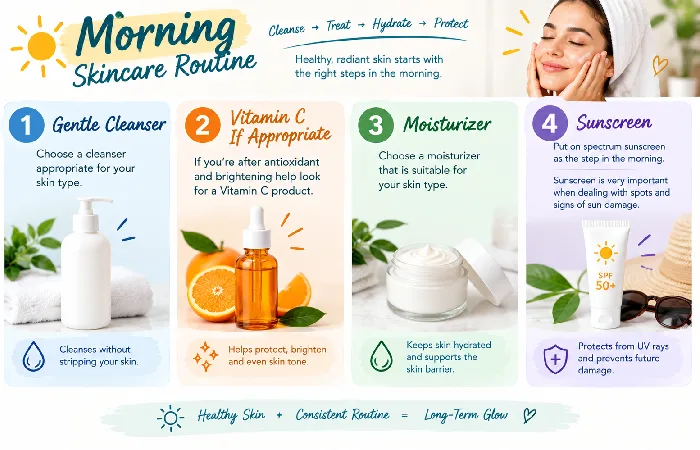
For someone using vitamin C in the morning a simple routine might be:
- Gentle cleanser
- Vitamin C serum
- Moisturizer
- Broadspectrum sunscreen
The American Academy of Dermatology says using vitamin C after cleaning and before sunscreen is one way.
Vitamin C and Sunscreen
Vitamin C should not be seen as a replacement for sunscreen.
Sun protection is one of the important parts of a skincare routine especially if the goal is to reduce signs of aging from the sun or stop dark spots from getting worse.
A vitamin C product can be a step but sunscreen gives the main protection from UV rays.
Vitamin D and Skin Health
Vitamin D is sometimes called a “skin vitamin” because the skin can make vitamin D when exposed to UVB rays.
That does not mean it is a good idea to get more sun on purpose.
Vitamin D has roles in the body but the American Academy of Dermatology suggests getting enough vitamin D through food and fortified items instead of trying to get it from the sun. Sun exposure is a known cause of skin cancer.
Vitamin D Food Sources
Natural sources include:
- Fatty fish like salmon
- Tuna
- Mackerel
- Egg yolks
- Some fortified foods
The NIH says that not many foods have vitamin D naturally so fortified foods and supplements are important for some people.
Should You Get Vitamin D From Sunlight?
There is a difference between normal sunlight and trying to get vitamin D by tanning or staying in the sun for a long time.
Dermatology groups do not suggest exposing skin on purpose to UV light as a way to get vitamin D because UV radiation increases the risk of skin cancer.
If a person is worried about vitamin D, a doctor can. See if testing and taking supplements are needed.
Vitamin E is a soluble antioxidant.
It protects cells from damage and has certain functions in the body. Whole grains, rice, cereal, pasta. Food sources include oils, nuts, seeds, spinach and broccoli.
I see Vitamin E being used in skin care because it helps provide antioxidant benefits with moisturisers.
It may be found in:
- Moisturizers
- Oils
- Serums
- Body lotions
- Lip products
- Sunscreen formulations
- Barrier support products
Vitamin E is also often mixed with vitamin C in cosmetics because both act as antioxidants.
Vitamin E From Food
Then relying on high dose supplements, I recommend including vitamin Erich foods in a varied diet.
Examples include:
- Almonds
- Sunflower seeds
- Vegetable oils
- Spinach
- Broccoli
- Other nuts and seeds
The NIH lists nuts, seeds, vegetable oils and green vegetables as sources of vitamin E.
Which Vitamin Is Best for Different Skin Concerns?
I have learned that there is no vitamin that solves every skin problem. The best approach is to match the ingredient to the issue.
Vitamins for Dry Skin
Dry skin does not always mean a vitamin shortfall.
For people with dry skin the foundation should be:
- Gentle cleansing
- Regular moisturizing
- Avoiding excessively hot water
- Avoiding harsh scrubbing
- Protecting the skin barrier
- Using sunscreen
A balanced diet that supplies the vitamins and minerals needed for normal skin function is beneficial but additional vitamins and minerals may not be needed just because the skin feels dry.
Skin care products with moisturizer and skin care ingredients, like niacinamide (Vitamin B3), used to make things in the skin care The post Skin care ingredients with Vitamin E and B vitamins appeared first on The Shine.
Which Vitamin Is Good for Acne?
Vitamin A is the directly linked vitamin to acne treatment because topical retinoids are proven acne medicines.
Retinoids can help unclog pores. Can improve acne as well as certain post acne marks and uneven texture.
Vitamin C may also help with inflammatory dark spots, but it should not replace proper acne treatment.
For people with acne skin, I advise not relying on a vitamin supplement to cure acne. Acne can come from causes and may need evidence based topical or prescription treatment.
Which Vitamin Is Good for Dark Spots?
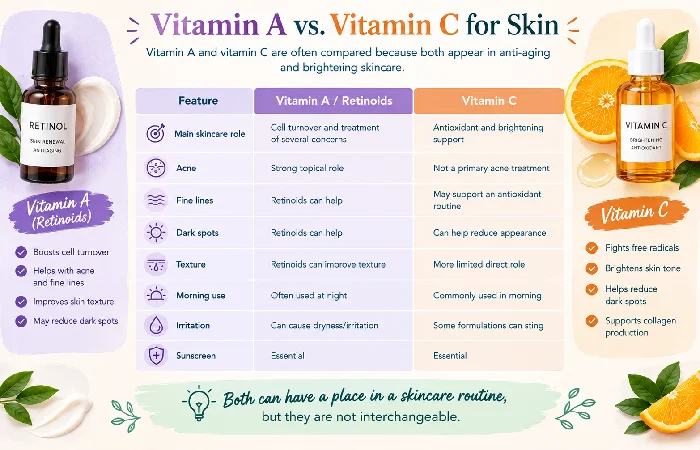
Vitamin C and vitamin Aderived retinoids are choices for treating dark spots and uneven skin tone.
The American Academy of Dermatology lists both vitamin C. Retinoids as helpful for dark spots and uneven appearance.
However, sunscreen is essential.
If the skin keeps getting UV exposure dark spots can stay hard to manage.
A simple routine might look like:
Morning: Cleanser → Vitamin C → Moisturizer → Sunscreen
Evening: Cleanser → Retinoid, if appropriate → Moisturizer
Not everyone needs both ingredients and people with skin may need a slower approach.
Which Vitamin Is Good for Aging Skin?
When people look for vitamins for aging skin they usually want ingredients that help with:
- Fine lines
- Wrinkles
- Uneven tone
- Loss of texture
- Dullness
- Sunrelated skin changes
Topical retinoids, which come from vitamin A are among the most proven for these concerns.
The AAD states that retinoids can treat fine lines, wrinkles, dark spots, acne and uneven skin texture.
Vitamin C can also help as part of a routine, especially for uneven tone and environmental damage.
Daily sunscreen remains a must.
Which Vitamin Is Good for Dull Skin?
Dull skin can come from causes, such as dryness, dehydration, buildup of dead cells lack of sleep environmental stress or natural skin traits.
Vitamin C is often used to brighten because it is an antioxidant and helps with spots and uneven tone.
A brightening routine does not need active ingredients.
A simple routine can include:
- cleanser
- Vitamin C in the morning
- Moisturizer
- Broadspectrum sunscreen
- Gentle retinoid at night if appropriate
Which Vitamin Is Good, for Sensitive Skin?
Sensitive skin needs care.
A product that contains a vitamin is not automatically gentle just because it has a vitamin.
For example vitamin C products sometimes sting, especially when they are very strong or made with a low pH.
Retinoids can also cause dryness and irritation when added fast.
People with sensitive skin can focus first on:
Gentle cleansing
Moisturizing
Sunscreen
Introducing one active ingredient at a time
Patch testing when appropriate
Stopping an irritating product rather than forcing the skin to “adjust”
People taking isotretinoin need extra caution because their skin can become very sensitive. The AAD says avoid retinol and other possibly irritating skincare ingredients while on isotretinoin treatment.
Vitamins for Skin: Food vs. Supplements vs. Skincare
One of the sources of confusion is thinking that eating a vitamin taking a supplement and putting a vitamin on the skin are the same.
They are not.
Vitamins From Food
Vitamin Supplements
Supplements can be useful when someone has a proven deficiency, nutritional need, limited diet, absorption issue or another medical reason.
They should not automatically be treated as beauty products.
If your diet already gives enough of a nutrient taking a lot more may not give skin benefits.
Topical Vitamins
Topical vitamin ingredients work differently.
Retinol and other retinoids
Vitamin C
Niacinamide
Vitamin E
These products are made specifically for applying to the skin and can have effects from eating the vitamin.
Best Foods for Healthy Skin
of focusing on a single skin vitamin build meals, around many nutrientrich foods.
Fruits
Choose a mixture of:
- Oranges
- Guava
- Kiwi
- Papaya
- Strawberries
- Berries
- Mango
- colorful seasonal fruits
Many fruits give vitamin C and carotenoids.
- Vegetables
- Include:
- Carrots
- potatoes
- Spinach
- Broccoli
- Bell peppers
- Tomatoes
- Other colorful vegetables
Colorful vegetables can give carotenoids, vitamin C and other nutrients.
Nuts and Seeds
Nuts and seeds can give vitamin E, biotin, healthy fats and other nutrients.
Examples include:
- Almonds
- Sunflower seeds
- Peanuts
- Pumpkin seeds
- Walnuts
- Protein‑Rich Foods
- Eggs, fish, dairy, legumes, meat and other protein‑rich foods give nutrients needed for normal tissue maintenance.
Fatty Fish
Fatty fish can give vitamin D and healthy fats.
Examples include:
- Salmon
- Mackerel
- Sardines
- Tuna
Can vitamins make your skin glow?
The phrase ” skin” is often used in beauty marketing but it is not a clear medical outcome.
Looking skin can reflect:
- Adequate nutrition
- A skin barrier
- Appropriate hydration
- Regular sunscreen use
- Good sleep
- Healthy lifestyle habits
- Appropriate skincare
- Treatment of underlying skin conditions
Vitamin deficiencies can cause health problems, including some that affect the skin. Correcting a deficiency can therefore be important.
If you already consume enough vitamins taking increasingly large doses is not a guaranteed way to make the skin look better.
The NIH specifically notes that a deficiency-related symptom does not mean taking more of that nutrient after adequacy has been reached will continue producing benefits.
Do vitamin supplements improve skin?
This depends on whether a person needs the nutrient.
For example biotin supplements are widely marketed for hair, skin and nails. Nih sources note that there is limited evidence supporting these claims in people without deficiency.
The same principle applies broadly:
Supplements may be used for cosmetics to correct a deficiency.
If symptoms are present that may indicate a deficiency your healthcare provider can recommend either a dietary assessment or blood test.
Visuals that indicate you should bring up vitamins to your doctor
Skin changes usually cannot tell you exactly which vitamin you need.
Consider speaking with a healthcare professional if you have unusual symptoms such as:
- Significant hair loss
- Persistent unexplained rashes
- Severe skin dryness
- Slow wound healing
- Fatigue
- Brittle nails alongside other symptoms
- Changes in skin color
- Digestive problems combined with nutritional symptoms
- A highly restricted diet
- A known condition that affects nutrient absorption
In some circumstances laboratory tests might be indicated.
DON’T try to self-diagnose a vitamin deficiency based on symptoms you see on the internet.
Can you take skin vitamins together?
Many multivitamins contain vitamins in one product but combining multiple supplements can increase the risk of excessive intake.
This is especially important with soluble vitamins such as:
- Vitamin A
- Vitamin D
- Vitamin E
- Vitamin K
soluble vitamins are stored in the body so high-dose supplementation can create safety concerns.
Water-soluble vitamins are not automatically risk-free either. Some can cause problems at high doses or interfere with laboratory tests.
Biotin is an example: high doses can interfere with certain blood tests even though biotin itself has not been shown to cause typical toxicity, at high intakes.
Vitamin A vs. Vitamin C for Skin
Vitamin C and Vitamin E for Skin
Vitamin C and Vitamin E are both antioxidants. Their roles are different.
Vitamin C is water soluble. It is needed for making collagen. Vitamin E is fat soluble. It also acts as an antioxidant.
In skincare both ingredients can be part of products.
For someone who’s mostly worried about patchy color and dark marks Vitamin C is often the best choice to use on skin.
For someone looking for moisture support, Vitamin E can be found in creams, oils and products that help the skin barrier.
What About Vitamin K for Skin
Vitamin K is another vitamin that helps with blood clotting and other body processes.
Vitamin K is present in foods such as vegetables.
Although Vitamin K is sometimes sold in products for beauty issues it is not the first vitamin people should think about when they ask which vitamin is good for skin health overall.
A wide range of foods is a starting point than taking supplements based on one beauty claim.
A Simple Vitamin Based Skincare Routine
You do not have to have every vitamin in your skincare routine.
Morning
Evening
Step 1: Cleanse
Take off sunscreen, makeup, oil and daily buildup.
Step 2: Retinoid If Appropriate
If you are using retinol or another retinoid start slowly.
Step 3: Moisturizer
Apply moisturizer to help with comfort and reduce dryness.
If your skin gets upset cut on how you use the ingredient of adding more products.
How to Choose Vitamin Skincare Products
When buying skincare with vitamins look beyond the word vitamin on the label.
Think about:
-
Your Skin Concern
Are you trying to fix:
- Acne?
- Dark spots?
- lines?
- Dryness?
- Dullness?
- texture?
Pick ingredients based on the concern.
-
Your Skin Type
A product that works for skin might not be nice for skin and a strong active product might not be good for skin.
-
The Full Formula
The vitamin is part of the product.
Check:
- Moisturizing ingredients
- Fragrance
- Preservatives
- Acids
- Ingredients
- Texture
- Packaging
-
Product Stability
Some vitamin ingredients can be sensitive to light, air or how they are made.
Follow the maker’s storage instructions
-
How Many Actives You Use
Using Vitamin C, retinol, exfoliating acids, benzoyl peroxide and other active ingredients at once can cause irritation.
A simpler routine is often easier on skin.
Common Myths About Vitamins for Skin
Myth 1: Vitamins Mean Skin
That is not always true.
Enough nutrition is important. Taking much does not ensure skin.
Myth 2: Vitamin Supplements Can Replace Skincare
They can’t. Skincare deals with parts of skin health.
A person can have a diet and still need sunscreen, moisturizer, acne treatment or another skin treatment.
Myth 3: Vitamin D Means You Should Sunbathe
No. The AAD says getting Vitamin D from food is better than trying to get it from the sun because sun exposure raises skin cancer risk.
Myth 4: Biotin Automatically Gives You Glowing Skin
There is no proof to support using doses of biotin for skin in people who are not lacking it.
Myth 5: Vitamin C Serum Replaces Sunscreen
It does not. Vitamin C and sunscreen do things.
Myth 6: Natural Vitamins Are Always Safe in High Doses
Natural does not mean safe.
Some vitamins can be dangerous in amounts, soluble vitamins, like Vitamin A.
How Long Does It Take to See Results from Vitamin Skincare?
The time it takes depends on the ingredient. What you want to fix.
A moisturizer can help with dryness quickly.
Vitamin C may need time to change color.
Retinoids usually need use over time. Might cause irritation at first.
The key is to stay steady than keep adding products.
If a skincare product causes your skin to burn swell stay red. Become irritated stop using it and seek help from a professional.
Which Vitamin Is Good for Skin? A Practical Summary
If your questions simply which vitamin is good for skin? the answer depends on what you want to fix.
For nutrition support
Focus on a diet that provides vitamins and minerals of relying on a supplement.
For spots and patchy color
vitamin C and vitamin A based retinoids may help, with sun protection.
For acne
Topical retinoids are known to help with acne.
For signs of aging
Retinoids are among the known vitamin A based products for aging skin and vitamin C can help with antioxidants and brightening.
For vitamin D nutrition
Choose food sources and supplements as needed than trying to get vitamin D from the sun.
For biotin
Get biotin from a variety of foods unless a doctor advises more. Biotin deficiency is rare. There is proof that high doses help skin.
FAQs
Which vitamin is best for skin?
No single vitamin is the perfect fit for all. Vitamins A, B, C, D and E – all have their place for health! When it comes to skin… Vitamin C and retinoids (derived from vitamin A) help with pigment, dark spots, acne, fine lines, wrinkles and texture.
Is vitamin C good for skin?
Yes. Vitamin C is an antioxidant. Vitamin C is needed for making collagen. Topical vitamin C is also often used to help with spots and signs of aging.
Is vitamin A good for skin?
Enough vitamin A is important for cell growth. Vitamin A based retinoids are also used for acne, fine lines, wrinkles, dark spots and uneven skin texture.
Is vitamin E good for skin?
Vitamin E How its used – Found in all of the products – Mention them here Nut & seed oils, nuts & seeds, leafy greens, spinach & broccoli and topical skin care products Vitamin E – what it is – An antioxidant.
Is vitamin D good for skin?
Vitamin D is important for health. Vitamin D should not be a reason to seek sun. The AAD says to obtain vitamin D from food and fortified items.
Does biotin improve skin?
Biotin deficiency can cause skin problems. This type of deficiency is rare. The evidence that taking biotin supplements helps the skin of people who already get biotin is limited.
Which vitamin is good for acne?
Retinoids made from vitamin A are known to help treat acne. Retinoids can help clear pores and improve acne well as some issues that come with it.
Can I take vitamin supplements for skin?
Supplements can help if there is a lack of nutrients or another medical reason to take them. However, taking amounts without a need does not always lead to skin. Could sometimes cause problems.
Ought I use vitamin C and retinol together?
Both can be included in your skin care routine. Sensitive skin may have a better time adding them one at a time than using all of the products together. Vitamin C is often used in the morning, and retinoids in the evening.
What is the effective dose of vitamin A for skin?
Vitamin A doses should not be used for vision without professional advice. Excess doses of vitamin A can be toxic. Be careful with vitamin A supplements if you are taking isotretinoin.
Final Takeaway: Which Vitamin Is Good for Skin?
The answer to which vitamins good for skin? is not one letter.
Vitamin A is important for cell growth and retinoids applied to the skin have uses, for acne, texture issues, dark spots and signs of aging.
Vitamin C helps with making collagen and fighting damage. Vitamin C is often used on the skin to make it look brighter and even.
B vitamins, including biotin and ingredients such as niacinamide in skincare play roles in nutrition and appearance. However taking doses of biotin does not prove that biotin helps skin for people who already receive enough.
Vitamin D is important for health. Trying to get Vitamin D by spending time in the sun is not an idea because sun exposure can be risky.
Vitamin E works as an antioxidant. Vitamin E is found in foods and in skincare products.
For people the best base is a diet in nutrients a skincare routine, a moisturizer and regular use of sun protection that covers a range of rays. Supplements should be taken when there is a need, for nutrition or medical reasons not just because something says it makes skin look better.
If there are problems like acne, dry skin, unexpected rashes, dark spots or other changes in the skin a dermatologist can help find out if the issue is, from skincare a skin condition, a medicine, nutrition or another problem.
This article is written as a page. Can support articles such as Vitamin C Benefits for Skin Vitamin E Benefits for Skin Vitamin A and Retinoids for Skin Vitamin D and Skin Health B vitamins and Biotin, for Skin and Vitamins.