
 GoBeauty Bay
  Shaista Rafi
Beauty & Lifestyle Content Writer
in
Shaista Rafi writes reader-focused beauty
and lifestyle content for GoBeautyBay,
covering skincare, hair care, makeup,
personal care and everyday beauty topics.
Shaista Rafi
Beauty & Lifestyle Content Writer
in
Shaista Rafi writes reader-focused beauty
and lifestyle content for GoBeautyBay,
covering skincare, hair care, makeup,
personal care and everyday beauty topics.
 Mirza Ibrahim Ali Khan
Editorial Reviewer
in
Mirza Ibrahim Ali Khan contributes to
GoBeautyBay's editorial review process,
focusing on clarity, content structure,
topical relevance and reader usefulness.
Mirza Ibrahim Ali Khan
Editorial Reviewer
in
Mirza Ibrahim Ali Khan contributes to
GoBeautyBay's editorial review process,
focusing on clarity, content structure,
topical relevance and reader usefulness.
It’s just part of life that as we age, our skin will undergo changes. You may find an increase of visible fine lines, decreased elasticity, dryness and the eventual formation of hyperpigmentation. Skin changes that are completely expected and that we can prepare for. An adequate anti-aging skincare regimen will offer protection for the skin to support healthier-looking skin over the long term.
A good anti-aging skin regimen does not need to be overly lengthy or require an obscene amount of skincare products. In fact, using too many can cause irritation without much in the way of actual skin improvement. If you choose to concentrate on powerful, reliable ingredients, like those we’ve detailed below (including broad-spectrum sunscreen, moisturizing agent, retinol, and antioxidants along with skin gentle skin cleanser), you’ll certainly be able to create a easily managed routine. This all-inclusive guide will go into detail on how to construct a routine that consists of both morning and evening sessions, the ingredients that work best, how to stack these efficiently, and ultimately how to adjust the regimen as your skin evolves.
Whether you’re in your 20s and focusing on prevention, are now in your 30s and dealing with small fine lines appearing on your skin, or even in your 40s and beyond and need something more targeted, the following basic principles apply across the board.
What Is an Anti-Aging Skincare Routine?
An anti-aging routine is essentially several day and night activities aimed at preventing avoidable damage to the skin and alleviating common aging signs.
An anti-aging skincare routine can aim to improve the look of:
- Fine lines
- Wrinkles
- Sallow, unequal skin tone and redness
- Brown spots
- Slight roughness on the skin surface
- Dull-looking skin
- Skin losing its tautness
- Dryness/dehydration
- Lack of radiance
- Sunspots/discolouration on the skin.
However, the term “anti-aging” can be misleading as technically there is not a skincare product that can completely block the aging process of the skin. In essence, your aim should be an ‘anti-aging-friendly’ skincare routine. Instead of aiming to turn your skin inside out there are simple ways in which to care for our skin, aiding our skin’s natural barrier and using such ingredients as the ever-ready vitamin c who fights everything against us!
Skin Aging: What can be causing it?
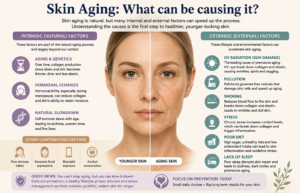
Intrinsic aging
This describes the natural ageing process. Your body naturally undergoes hormonal changes as you go through the years. With every year, production of certain skin constituents reduces, leading to naturally drier skin and less skin collagen and elasticity. There will also naturally be fluctuations in your moisture retention levels, and changes will occur in the skin’s structure and physical makeup as collagen production begins to drop off.
Extrinsic Aging
Extrinsic aging occurs due to external forces on the skin.
The main contributor here?
UV radiation.
Over time UV radiation, be it from the sun’s rays or artificial tanning devices, weakens collagen and destroys elastin within the skin, ultimately leading to a loss of skin elasticity, wrinkles, an uneven pigment across the skin surface, dryness, roughness and increased sunspots.
However other environmental and behavioural factors can contribute to the rapid aging of the skin, including air pollution, smoking, constant lack of sleep, stress, a history of drinking too much alcohol and consistent friction and irritation to the face. Lifestyle choices, even those you deem unrelated to skin aging, play their part.
Every factor impacting the skin’s age is out of your control in life, but many daily rituals aren’t. This is where taking time and investing properly in your anti-aging routine pays off significantly.
The Absolutely Crucial Anti-Aging Skin-care step: Sunscreen
If adding just ONE product is feasible for you within an anti-aging routine, make sure it is the appropriate type of sunscreen. Overexposure of the skin’s surface to the sun’s UVA and UVB rays is a key cause of accelerated aging of the skin. In conjunction with some other good quality skin care you’ll benefit in so many other ways and prevent further damage with just one quality product, namely sunscreen. Try a sunscreen with a good SPF and broad spectrum protection to shield you from UVR and UVA radiation, wear it last in your morning regime after your treatments and apply it liberally to all exposed areas including your neck and decolletage, it is as important in summer as it is in winter and on even cloudy days your skin takes damage from the sun. So you may be splurging on that expensive vitamin c serum or retinol, be aware that without your sunscreen you are still significantly damaging skin daily. In fact, I view sunscreen as the foundation of my entire skin care routine.
Your Anti-Aging Morning Skincare Routine
It’s a mistake to overload the skin with twenty separate components at morning time. Instead, a basic yet highly effective routine is cleanser, antioxidant serum, moisturiser and finally sunscreen. Certain steps can be removed if your skin type doesn’t require them or you don’t feel the benefit or if two elements perform the same function together and provide a quicker application. We’ll examine each step in detail.
The 1st step of a morning skincare routine: a Gentle Cleanser
You will benefit greatly from a suitable gentle skin cleanser if your skin feels it needs a thorough cleanse at the start of the day. At night, sweat and old products will accumulate as will environmentally damage or residue. As the goal is to start the day fresh-faced and not stripped of vital oils, your cleanser should leave your skin feeling supple rather than ‘tight’, a sign that an improper cleanse took place. Avoid using anything too harsh on the skin; when you look after yourself, this means avoiding any stingy, tight and peeling symptoms post-wash. Dry and more mature skin types should be the gentlest when cleaning as any irritation will result in sensitivity later.
The 2nd step: your choice of Antioxidant, such as Vitamin C or other effective products
Vitamin C has become notoriously popular amongst beauty specialists, but for a good reason. It can effectively protect against certain environmental damage and encourage an even-looking skin tone. Best suited to, Those with skin types/ concerns: – No tone (dull skin), dark patches, sallowness/ lack of colour to the face. Start small- be patient Vitamin C serums can cause flare-ups if skin is not accustomed to active ingredients or if your face is thrown in to a rigorous regime by introducing a too high strength of vitamin C serum. This could be where prescription results reduce redness with less obvious inflammation.
Step 3: hydrating ingredients (Hyaluronic acid and other products).
There are many hydrating ingredients that improve the surface and overall looks of dry or dehydrated skin. The popular ones include Hyaluronic acid, glycerine, panthenol, Beta-glucan, Ceremide’s. They will ensure skin stays looking plump, smoothing out fine lines simply by keeping more water under the skin’s surface; skin hydration will keep skin looking plump and in the same way can mask some fine lines but do not have the same effect as reducing aging structure.
The 4th step is a Moisturiser: The backbone of any anti-aging routine
For those seeking to avoid dryness, irritation and increase elasticity in the skin barrier, a moisturiser is key to providing the skin with essential oils and vitamins needed. Look for ingredients such as Ceremide’s, Glycerine, Hyaluronic Acid or even Squalane for dry skins. Active Ingredients, such as Peptides, used throughout many cosmetic routines also work toward firming up the look of skin, although as this can depend quite heavily upon how many of these ingredients are included.
If your skin is particularly oily or has more of a tendency toward a shiny and greasy complexion, opt for a lighter gel, or a lotions rather than heavy, occlusive creams. If however your skin tends to get dry and tight through the day or after washing you will more than likely benefit from a rich moisturiser.
The 5th step
perhaps most important to maintaining a long-term youthful outlook on your skin is the all-important Broad-Spectrum SPF 50. This should not be considered an optional element to your skin care routine at all. Allow your topical medications time to absorb before your moisturizer. This protection is essential against cumulative sun damage and the aging process.
Apply your high SPF 50 suncream before going out, apply and reapply when necessary, and it will look after you! Remember there is also sunscreen incorporated into make-up to further assist protecting skin against any invisible radiation it might be exposed to.
Retinol cream to help turn back time in your own personal spa (or master bath.) From then on to your night regimen will add an additional cream or two. A basic night plan with a product to slow skin’s appearance of aging can consist of cleanser, treatment, moisturizer.
If on a night utilizing retinoid product after cleansing the face apply the retinoid, then an application of the moisturizer.
This will help prepare your face, for anything you want to have done to it for many years to come. The most irritating of all items is generally the retinoid. If you discover that your skin feels like it is sizzling you can attempt what is called the \”sandwich” method. This implies putting moisturizer, then retinoid, then a moisturizer. This will tone down how potent the retinoid treatment you choose is.
Retinoids:
The King of Anti-Aging
The best known group of topical ingredients to combat the signs of skin aging is the retinoids. The group consists of ingredients that relate to vitamin A. Depending on what you buy you can see retinol, retinal, Adapalene, prescription tretinoin or many other retinol formulations that contain retinol as the active ingredient.
These are the ingredients to consider if you wish to minimize the appearance of fine lines and to support skin texture and brightness, as well as some dark marks.
There are very few contraindications to using retinol even for those of you with moderate sensitivity. However, there are some precautions to keep in mind. First and foremost, don’t jump into using a retinoid on a daily basis immediately. Begin the process slowly: The first week or two, use the retinoid cream or serum only two nights a week, and only on alternate nights.
If tolerated, start moving to once per evening on your non-retinoid evenings.
Soon you will begin to add your non-retinoid actives back in, slowly, to ease in. However you don’t have to use a retinol every single night to see effects from it. So now, it is quite good to start thinking about your next move to help fight signs of aging.
What are some Side Effects of Retinoids?
Side Effects of using Retinoids?
It is quite common for each person to feel some level of discomfort; itchy, flaky, on first using a Retinoid product.
Just remember that a Retinoids discomfort level does not always indicate that the product is going to work a whole lot better than a lower dose would.
Watch out for: Dry skin.
Peeling or shedding of skin. Redness, stinging or sensitivity. For significant irritation, you should ease up and only use the Retinoid one night in 3 or 4.
If you can’t tolerate any of these things but you absolutely want Retinol treatment, look to one of the other ingredients listed in the R group.
Please check in with your doctor before trying Retinoids if you are expecting any time soon, are looking to become pregnant, or are breast feeding.
Peptides as an Anti-Aging Option for an Aging Face and Skin Products For a mature face, peptides are an attractive option. Peptides are really the “building blocks” of the body and the structure of our skin. They are small protein chains that can be blended with other components to produce a result for things like fine lines and support for the look of firmness of an aging face and skin texture.
Peptide skin products can be found to work well within a routine because some can be quite gentle in their activity.
In fact, peptides can make up the core ingredients of most serums and some of our more popular moisturizers to help our face look Younger. But again, don’t be taken in by the marketing! Even the most expensive peptides won’t match the support from our traditional best ingredients, though they are a nice addition.
Skincare using Niacinamide to fight Aging Face:
A way to travel time back to youth Niacinamide – or what you would know better as a type of Vitamin B3, is the most comprehensive skincare ingredient currently available today.
Niacinamide helps to support the skin barrier which means less irritation is seen over time.
This wonderful ingredient is also brilliant when it comes to evening out the appearance of skin tone and regulating the balance of oil in all skin types. You will find this ingredient incorporated into almost every product on the shelf, such as moisturizers, serums, cleansers, and more. Since we want to turn back time and make our skin look Younger, a concentration of 5% or more is generally considered best for those of us with an aging face. However higher doesn’t always mean better.
Some may find it irritates their sensitive skin at lower percentages too!
Skin Barrier Protection with a Skin Care Routine involving ceramides
While your journey begins for smooth, younger-looking skin the first things to get acquainted with in an age-defying skincare regimen is first support for barrier of the skin. Because skin can age and lose some of its barrier qualities making it feel dryer as well as dry, and the face looks aged or uneven. To get an aging face “back on track” one such product that must support the skin barrier will have ceramides in it, preferably ones that make up a large proportion of skin barrier – namely palmitamide MEA-9 is a more advanced type.
Using a gentle cleanser, a supporting moisturizer with ceramides, an appropriate targeted treatment, sunscreen and some downtime for you are the components of a well balance, aging face routine. A lot of times the best aging face plan doesn’t involve using a strong ingredient, instead keeping and repairing the barriers of the skin.
Other Topical Anti- Aging Options
Other useful but, perhaps less known at this point topical ingredients with anti-aging properties include coenzyme Q10, also known as ubiquinone. Coenzyme Q10 comes in various skin care formulations and provides its own unique set of benefits for skin that shows aging. The more we can encourage our bodies to produce collagen the more we can keep the outward appearance of skin young because of the increased structure that collagen provides skin to stay firm as it ages.
Anti-Aging Routine Based on your Skin Type
Your best routine will also depend slightly on your skin type.
Dry skin anti-aging routine.
Work on replenishing moisture levels and improving skin barrier function.
AM. Gentle cleanser and hydrating serum followed by moisturizer and sunscreen.
PM. Gentle cleanser, retinoid few nights a week as tolerated, richer moisturizer.
Limit exfoliation.
Oily skin anti-aging routine.
Dryness can affect oily skin.
Keep non-comedogenic and lighter textures where suitable.
AM. Gentle cleanser and vitamin C or niacinamide followed by light moisturizer and sunscreen.
PM. Cleanser followed by retinoid and light moisturizer. Consider salicylic acid few times week separate nights.
Combination skin anti-aging routine.
Needs differing applications depending on parts of the face. Layer the lighter textures over the entire face, then follow with richer moisturiser for dry parts only. Don’t treat the entire face strongly because one spot happens to be oily.
Sensitive skin anti-aging routine.
Slower is better. Start with a gentle cleanser, moisturizer, sunscreen. Gradually introduce one single active. It may be a gentler retinoid or any other useful ingredient but don’t shock the system with multiple additives. Patch test the products before slathering them on.
Antiaging Routines Based on Age –
Twenties
A Quick Summary The twenties are a really fantastic time to start learning about skin care, and good habits like consistent application of sunscreen during the day to combat aging in all our skin concerns. You can utilize a good cleanser that works with your skin type, a simple moisturizer and of course always sunscreen for the protection of your face against premature aged. A great lifestyle goes along way.
Eat a healthy diet and stay properly hydrated to help turn back time!
Thirties
The thirties are the time to make sure that you have taken up more specialized ingredients to use at nighttime such as the “treatment cream” which I use as the second step of every one of my routines. It contains both “Retinoid” and “Ascrobic Acid “which is Vitamin C to really fight the signs of aging skin.
40s
In your 40s: While skin can get drier or more sensitive with age, there are key things to consider: sun exposure protection hydration barrier support retinoids antioxidants gentle exfoliation. Do not take a reactionary approach to the newest concern, by piling more actives onto your skin. The rule of thumb: Simplify.
50s+
In your 50s+. By age 50 and beyond, adequate hydration and a healthy skin barrier will take precedence.
AM: 1.A gentle cleanse.
Antioxidant serum.
3.a simple moisturizer (your age can influence what’s best for your skin, from light weight to a Rich, but effective moisturizer to address age concerns)
4.Sun protection.
PM:
- A cleanse.
- Retinols.
- A facial serum.
- Moisturizing cream.
- Sunscreen
Evening routine:
1.Gentle cleanser.
- Retinoid, as tolerated.
- Rich moisturizer.
Your attention might shift to your neck, chest, and hands since they tend to be more prone to sun damage. Neck and Décolletage Care.
People often overemphasize the care and protection of the face while ignoring their neck and chest.
If a product is designed and suitable for the face, chances are you can use it on these areas too. Crucially, you always need sun protection for any exposed areas of skin. Since it’s very common for your neck to be more sensitive than the rest of your face, introducing new treatments to that area should be done slowly and carefully. Hand Care and Anti-Aging.
Your hands undergo repeated exposure to UV radiation as well as repeated washing with water and detergent.
Simple hand care would consist of: Hand moisturizer. A sunscreen that’s SPF 30 or greater, and wide spectrum. Reapplication of moisturizing cream or hand lotion after washing hands whenever possible.
Protect hands from detergents, irritating compounds, and extreme temperatures by using household/garden gloves when necessary, during performing house/yard work. Keep your skin (and specifically hands) sufficiently moisturized no matter what else. Application order: Layering of Anti-aging skincare products.
Proper method is often confusing for beginners.
As a basic rule of thumb, start with the lightest texture/smallest molecular size product and move towards thicker textures/larger molecular sizes. Basically, product types: Cleanser Thin products Treatments Moisturizers Sunscreen (daytime) for example, day time regime
- Cleanser.
- Vitamin C serum.
- Hydrating serum.
- Moisturizer.
- Sunscreen.
Evening routine
1.Cleanser.
- Retinoid.
- Moisturizer.
Note that if your skin is sensitive, apply moisturizer first, followed by a retinoid.
Product formula will influence order: always read instructions and your skin’s reaction. Ingredients You should be careful combining. Many ingredients, especially actives, have the potential to interact with other ingredients. This is why multiple-active formulas are sometimes used.
Careful consideration needs to be paid when combining:.
Retinoids. Potent AHAs. Potent BHAs.
Benzoyl peroxide. Strong exfoliation treatments. You may never have to forgo an ingredient completely.
Alternation of treatments can be more beneficial for many, i.e.: Sunday: Treat (retinoid).
Monday: hydrate and support (moisturizing, peptide). Tuesday: treat (exfoliation). Wednesday: hydrate and support. Etc.
This strategy should be approached with care and tested for the individual based on his/her specific product and individual reactions/tolerances.
Common Anti-Aging Skin Care Mistakes.
- Sunscreen use is the greatest anti-aging benefit. Not using it is among the worst mistakes of all.
- Introducing 5 or more treatments to skin at one time makes it challenging to pinpoint irritation sources when the skin reacts.
- Over-exfoliating skin can lead to the opposite result from what you may be after; i.e. A brighter smoother looking skin tone.
- Too much use of retinoids; skin will not benefit from having it applied every morning and night but rather will become overtreated/irritated.
- Dry skin products are often skipped in oily skin, resulting in compensatory dryness and oiliness.
- Changing routines or products too often won’t provide a person with sufficient results; consistently applying will.
- Products may take time to work effectively-especially concerning subtle issues of lines/texture, so do not expect changes overnight.
- Wrinkles alone aren’t what constitutes young-looking skin; overall healthy and youthful appearance comes from well-moisturized skin tone, even skin, smooth texture, and a sound skin barrier.
- Using Someone else’s routine is not your specific needs as you do not have exactly his/her skin-type or condition.
- Most often the more expensive product is not necessarily the more effective one.
How Long Does an Anti-aging Skin care regimen take to work?
A skin care product doesn’t do over-night work, and it generally can take much longer to see results. Moisturizing products can have immediate effects on skin feel, smoothing dryness or flaking, but improvements in things such as fine lines, skin tone and texture generally require several months of consistent treatment. As a general time frame:
Week: time frame: Learns what treatments your skin tolerates or reacts with. Several weeks or months: Start to see improvements such as texture refinement, tone equalization.
Month: Apply a maintenance routine.
Track photos under identical lighting every few weeks and months. Lifestyle Habits That support Healthy Aging Skin. Lifestyle is one aspect of healthy skin as skin-care merchandise constitutes a small segment of skin healthiness. Get enough sleep adequate Sleep represents an elemental aspect of healthy living.
As opposed to searching for time for many nighttime products or treatments, consider working toward getting adequate sleep at consistent intervals.
Balanced Diet Foods include the following types of nutrients from an adequate variety: vegetables, fruit, adequate protein foods, carbohydrates, healthy lipids, etc. Consume an adequate quantity of water; proper hydration supports all body functions. Overuse of H20 will not effectively produce lines and wrinkles vanishes.
Stop Smoking the act of smoking affects skin health detrimentally, contributing greatly to the appearance of signs of aging. Reduce emotional stress excessive stress negatively impacts many body functions and your appearance as well. Engage in helpful stress-reducing techniques, such as those involved in exercise, deep breathing exercises, meditations, recreational activities, short walks, music listening, reading, as well as socialize. Use of sun protection in case you plan on outside activity, broad spectrum UV rays use to shield yourself from. Avoid excess over-exposure to the sun.
Natural Skin care: what works?
While natural ingredients can certainly be helpful for skin health, understand that ‘natural’ doesn’t imply “safer”, “more potent” or even more effective. Botanically derived ingredients like Centella Asiatica,licorice extract, green tea or Chamomillarecuta can also cause adverse reactions, or allergies in some users. Rose, aloe vera, green tea extracts are all popular cosmetic ingredients.
Select products for their formulation quality and effectivenessthrough clinical trials, rather than any indication that they are “natural”, i.e., naturally derived.
Facial Massaging reducing lines and wrinkles?
Facial Massage can assist in relaxation, temporary fluid reduction of puffiness in the face, and can briefly improve tone; but it is not an alternative or supplement to the scientifically proven, conventional treatments. In massage, use soft strokes and lubricated skin or face to reduce frictional pulling on the skin.
Do NOT apply forceful tugging, pulling or rubbing, specifically if the skin is inflamed or suffering from acute eczema.
Facial exercises will stop skin aging?
There are a multitude of conflicting arguments circulating online; with regards to prevention of facial ageing effects; it’s still unclear on medical evidence whether facial muscle contractions effectively hinder and minimize wrinkles or other visible signs of ageing. These exercises can be enjoyable to some if conducted as a relaxing facial treat but are not necessarily beneficial and cannot substitute topical treatments or proper prevention plans.
Treatments for Aging skin.
There exists an assortment of treatments dermatologists use in their practice, all depend on your problem of aging skin: Chemical Peel Lazer Treatments Micro-Needling Potent Prescription Retinoids. Neuromodulators (Botox like treatments). Dermal Fillers. Treatments such as radiofrequency and ultrasound, etc.
Which professional treatment depends on your skin type, diagnosis of your condition, wishes and acceptable levels of risk/side-effects involved and side effect profiles. Treatments must be done by properly qualified and licensed healthcare professionals and any consumer needs to beware of unregulated practitioners or products from uncertified vendors, because it carries a potential of harm to your skin or body from non-qualified persons.
When to consult your doctor?
Any concerns you might have including Persisting Redness, Significant burning or itching, Unexpected skin Pigmentation changes unusual appearing or changing moles. New occurring growths on the face or other areas of the body.Rough or dry skin at certain patches. Sudden dramatic changes in existing condition. Extreme facial skin dryness or flakiness. Persistent and severe acne reaction. Doctor assessment is important to pinpoint a condition or a recommended treatment approach, especially if treatments performed at home are unable to help the patient. Note: not all areas of discolored pigment, wrinkles or texture differences can merely be cosmetic.
A Simple Weekly Anti-Aging Skin Care Schedule.
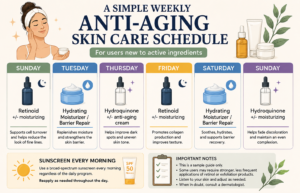
The minimalist skin care routine
The minimalist skin care routine for face and body/anti-aging products and treatments It can be overwhelming to keep track of various ingredients and multiple products in a routine.
The minimalist route for the face can simplify things to the essential morning/nighttime use:
- Cleanser
- Moisturizer
- Sunscreen (morning use).
- Retinoid if applicable.
After applying, add Vitamin C, Niacinamide, Peptides or acids if dealing with specific concerns.
The less effective routine you do will be better than the perfect, most-complete, un-used routine on your bathroom counter.
The Ultimate Anti-Aging Routine Is Your Actually Consistent One
There is no magic cream to turn back the clock.
You don’t need to treat every visible aging sign either.
The best signs of skin age are likely to include things like pores, fine lines, expression lines, freckles, pigmentation, and textures.
Ultimately, an anti-aging routine should support the health of your skin and promote natural aging. Start with:
- UV Protection.
- Gentle cleansing.
- Consistent moisture.
- Appropriate, evidence-backed actives.
- Incremental changes.
- Limited aggravation.
- Holistic support of healthy lifestyle habits.
- Patience.
- Routine adaptation over time, when your skin is different.
- Professional consultation when one skin symptom is warranted to be assessed by a doctor.
Anti-Aging Skin Care FAQs
What’s the best anti-aging ingredients?
There’s not one “top” anti-aging ingredient; it all depends on the various issues that the skin might have. Topicals that have a lot of science-backed evidence addressing various aspects of photodamaged skin include a retinoid. Of course, don’t forget to remember the skin protection of sunscreen which will also serve as prevention! However, vitamin C, niacinamide, peptides, acids, and more have benefits too.
What age should I begin applying and utilizing anti-aging skincare routine?
There’s not an exact age you have to be when starting an anti-aging skincare routine. Almost any age would benefit from basic cleansing, moisturizing, and sun protection. You can add a treatment to your skincare routine, for example if something specific that’s bothering you happens to develop.
Can sunscreen prevent the aging process of skin?
Using an effective sunscreen daily, which protects against 100% of UV exposure to the best of science and engineering ability, can do more to prevent premature photoaging and skin cancer than almost anything else.
Is Retinol Safe for All Skin Types and Every Patient?
So many people will tolerate a topical retinoid well, though irritating, red and peeling side effects will occur if used more often or on the wrong type of skin. Patients who are pregnant or trying to become pregnant must seek guidance from their physician.
Can I Use Vitamin C and Retinol together in a Skincare Routine?
Yes, each could play a role in the total picture of one’s anti-aging skin care regimen. So, with sensitive skin, would use them at separate times in order to make sure they’re separated, e.g. Topical vitamin C in the morning and topical retinoid at night.
How often should mature skin exfoliate?
This varies wildly. For skin aging patients that are using any active treatments such as topical retinoids, over-exfoliation could result in a compromised skin barrier and additional damage/redness/irritation. Once weekly might be enough; potentially much less will be sufficient as skin ages. Look for the dreaded red face/ burning/peeling, which indicates that you need to decrease usage until the skin is repaired-sometimes this can take weeks of being on non-exfoliating active treatments, etc.
Is It Necessary to Use a Heavy moisturizer on mature, anti-aging skin care?
Mature, anti-aging skin may find benefit from multiple approaches based on skin type and climate (rich cream vs. Lotion for dry vs. Oily skin respectively, etc), but a thicker cream does not equate a more appropriate or a better anti-aging regimen.
Can topical treatments remove wrinkles, fine lines for good?
Topically there is not one anti-wrinkle cream on the market that will eliminate all wrinkles. However, based on composition and ingredient list, some topically anti-aging skin treatments can impact the appearance of lines, skin texture, tone, and overall colour when consistently applied for extended periods of time.
Does drinking more water take care of your wrinkles?
Sufficient fluid intake ensures healthy functioning throughout the body including the skin barrier’s moisture holding capacity, however, extra water alone does not clear established wrinkles.
Is Expensive Anti-Aging Skin Care Necessarily Better than Affordable Options?
This can be highly variable. Often, what constitutes a better formulation is that where ingredients are of higher quality and concentration; stable, yet capable of delivery; applied daily; appropriate for your skin type and concerns. Often, many of these attributes come at a premium price point; however, there are also very effective yet affordable brands and products.
How many different skin care products does it take for an effective anti-aging routine?
Often you need much less than you would think. Basic cleansers, Moisturizers, sunscreen and targeted treatment alone are a very robust program, especially if tailored specifically to an individual, but many topical products can provide other benefit too.
Final thoughts:
No single treatment should feel like it is taking away from your skin. It should enhance it, protect it, and contribute to its overall health for years to come.
There’s no single right or wrong way to perform anti-aging skin care. The journey to preventing skin damage from skin aging should ideally feel safe, manageable, and tailored for your skin type as well as concerns. Start with the basic elements. Integrate 1 new ingredient or product into your routine at a time, and be sure to give it enough time to start making an effect in order to ensure it’s providing any real benefit and not causing adverse side effects. Make sure you protect your skin’s surface with sunscreen and give it a helping boost to the skin barrier.