
 GoBeauty Bay
  Shaista Rafi
Beauty & Lifestyle Content Writer
in
Shaista Rafi writes reader-focused beauty
and lifestyle content for GoBeautyBay,
covering skincare, hair care, makeup,
personal care and everyday beauty topics.
Shaista Rafi
Beauty & Lifestyle Content Writer
in
Shaista Rafi writes reader-focused beauty
and lifestyle content for GoBeautyBay,
covering skincare, hair care, makeup,
personal care and everyday beauty topics.
 Mirza Ibrahim Ali Khan
Editorial Reviewer
in
Mirza Ibrahim Ali Khan contributes to
GoBeautyBay's editorial review process,
focusing on clarity, content structure,
topical relevance and reader usefulness.
Mirza Ibrahim Ali Khan
Editorial Reviewer
in
Mirza Ibrahim Ali Khan contributes to
GoBeautyBay's editorial review process,
focusing on clarity, content structure,
topical relevance and reader usefulness.
Choosing a good cleanser for dry skin can really help your skin feel comfortable and balanced. If your skin feels tight and looks flaky after washing, your cheeks feel rough, or your skin gets dry immediately after washing-your cleanser may be contributing to the problem. Dry skin does need to be washed but rarely needs an aggressive-‘squeaky-clean’ face wash. A suitable cleanser should be capable of removing dirt, sweat, oily impurities, sunscreen, and makeup and cause minimal unnecessary disruption to the skin barrier.
“The American Academy of Dermatology,” recommends fragrance-free and mild cleanser for dry skin and warns to use only an adequate amount of the cleanser and no more, while remembering there’s no ‘one’ best cleanser for all dry skin conditions-the right choice depends on just how dry your skin is, if your skin type is sensitive, or if you have conditions such as eczema or acne. In addition, keep in mind your usage circumstances with any products, and your own skin’s response to a cleaner post-application. This comprehensive article on choosing the right cleanser, which ingredients in cleansers, what textures are available in cleansers, and most importantly- how to make your own cleanser routine!
What is the Best Cleanser for Dry Skin?
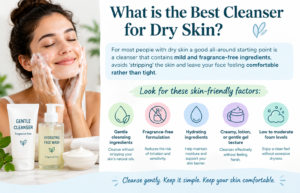
A skin-friendly, skin-barrier supporting, non-irritating formula with a kind formula
The American Academy of Dermatology recommends fragrance-free formulas for dry skin, and helpfully pointed out the difference between fragrance-free and unscented as fragrances may be present in the latter simply to neutralize Odors.
If you have particularly dry and/or sensitive skin, a cream-style, lotion-style or a low-lather cleaner may be more comfortable to use than a more bubbly facial wash.
What is the reason for using a particular cleanser on dry skin?
The outermost layer of your skin helps to trap in water, as well as keep environmental contaminants out. However, if your skin begins to become too dry, skin becomes rough, flaky and taut, leading to irritation and potential breakage of the skin-barrier – this then increases the potential for your skin to become more sensitive and susceptible to external factors. If skin becomes extremely dry, there’s even the potential to crack which increases the likelihood of bacteria found on skin having the opportunity to infect.
The reason for having an appropriate cleanser is because your skin has to shed build-up of sweat, dirt, makeup, sunscreen, excess oil, pollution and leftover product. Over-cleansing your skin may therefore further exaggerate any dryness already present.
Therefore, the optimum result of cleansing should always include: Comfortable, supported skin post-wash
What Makes a Cleanser Right for Dry Skin?
Consider the following five significant attributes when selecting a dry-skin cleanser:
1. Gentle Cleansing: The cleaner must rinse away all unwelcome accumulation from the surface of the skin without ‘stripping’ the skin in the process. Heavy lathering, contrary to what many people believe, isn’t necessary for clean skin and the AAD recommends using just enough cleanser on the skin to effectively remove dirt and oil, and avoid over-application to prevent a large, stripping lather.
2. Fragrance-Free Formulation: Fragrance can prove to be a real challenge when trying to cleanse sensitive or reactive skin and if you have a tendency to become irritated when cleansing your skin with fragrance, choosing a fragrance-free product can be a sensible option although some may argue that anyone with dry skin shouldn’t choose fragranced products unless they already know that their skin won’t be sensitive to fragrance. When opting for a cleaner that is fragranced-free and the skin is dry and also prone to sensitivity, it’s often safer and more advisable to choose a product that clearly states ‘fragrance-free’ rather than ‘unscented’ as unscented cleaners may include masking fragrances.
3. Hydrating Ingredients: Although it is not recommended for cleaners to have moisturizer properties, certain hydrating elements found within formulations can improve the overall washing process for your dry skin. These ingredients typically include glycerin, panthenol, hyaluronic acid, and aloe along with the occasional emollient ingredients such as certain fatty alcohols and even squalene in some formulations. The National Eczema Association’s directory recommends several fragrant-free cleaners for dry skin that include Glycerin, Panthenol, Niacinamide, Squalane, and other soothing agents.
4. Comfortable After-Feel: If your skin does not feel excessively tight, squeaky or uncomfortable right after washing it’s likely that the right cleanser has been used for your dry skin. Cleaners that help retain suppleness can sometimes be more beneficial than those that cause a deeply oily ‘oil-removing’ effect.
5. Skin Suitability: Although a cleaner has been heavily recommended and found suitable for one type of dry skin, there is no certainty it will provide the same benefit for all people with dry skin. Your skin type, whether it be prone to sensitive, acnetic or eczemaic breakouts or even your general environmental conditions, what you are likely to apply onto your skin and your preferred textures of cleaners must be accounted for as individual preferences and sensitivities will vary, therefore if there are a number of products or a few ingredient formulations causing irritation to your skin’s sensitive condition; consider using those in order to gain and increase suppleness and a feel of comforting wellbeing while in the process of cleansing the skin’s accumulation.
Best Types of Cleansers for Dry Skin
The type of cleaner you choose can also be influential depending on your dry skin condition.
Cream Cleanser
The ideal and first type of cleanser typically for dry and/or sensitive skin would be a cream cleanser, these come in a soft cream-like texture and cleans without creating too much froth, which is highly suitable for dry, sensitive, mature, winter dried and tight feeling skin.
Lotion Cleanser
Lotion cleansers are incredibly lightweight and moisturising and work best when a lighter cleaner than a rich cream type is preferred but the skin is either suffering from mild dryness or sensitivity, lotion cleaners are suitable for normal-to-dry skin, dry and/or sensitive skin, mild dryness, and even everyday cleaning.
Cleansing Balm
If you wear heavy cosmetics or water-resistant sunscreen, a cleansing balm is the perfect solution due to its extremely hydrating and oil-based nature. They work to effectively dissolve makeup, oil-based sunscreen, heavy accumulation from your skin and anything else required on the day of your cleansing routine and are most popular when used as the first stage of a double-cleansing routine with those that have heavy, cream and liquid based cosmetics on their face all day long. The usefulness of these cleansers could depend on whether you often wear water-resistant sunscreen and makeup.
Cleansing Oil
Cleansing oils perform very similar functions to cleansing balms, whereby helping to remove makeup, sunscreen and other oil soluble impurities due to their nature as being an oil which helps them dissolve substances other than water from the skin. This type of cleanser is ideal for people with dry skin who wish to get rid of both make-up and sunscreen but prefer to avoid the tightened/strippped sensation which many highly frothy cleaning detergents are responsible for creating; many individuals also love the idea of it dissolving pollutants, makeup, skin accumulations of pollution and oily secretions all on the surface of the face. A good choice to take on trips and journeys with you is a cleansing oil since they carry many useful and advantageous cleansing features to facilitate cleanliness and skin comfort simultaneously.
Foaming Cleanser
It doesn’t mean that Foaming Cleanser are evil for skin.
The problem with some formulas is they feel unpleasant to dry skin.
If you have skin but like foam search for a gentle fragrance‑free, hydrating Foaming Cleanser instead of skipping all foaming cleansers.
The National Eczema Association lists fragrance‑free Foaming Cleanser that still make some foam and are safe for skin.
Micellar Water
Micellar Water can be very effective for removing make up or to use if a full face wash is not convenient However, depending on the formulation and your skin’s sensitivity you may prefer to rinse
For makeup or sunscreen Micellar Water may work better as part of a broader cleansing routine rather than as your only cleanser.
Cleansing Milk
Cleansing Milk has a milky texture and is often made for gentle cleansing.
It can be an option for:
- Dry skin
- Sensitive skin
- Mature skin
- Makeup removal
- Morning cleansing
Which Skin Cleansing Ingredients Will Help for dry skin?
Don’t let an ingredient list scare you! There are quite a number of ingredient categories useful for dry skin and you certainly don’t need to learn them all.
Glycerin-
This is a Humectant, and very popular in Skincare products
It helps attract and keep water in the layers of the skin.
It is often found in cleansers made for sensitive skin.
Hyaluronic Acid
Hyaluronic Acid is another humectant found in hydrating skincare formulas.
In cleansers it can add hydration although a cleanser is rinsed off and therefore should not be judged the same way as a leave‑on hyaluronic acid serum.
Ceramides
Ceramides are lipids naturally found in the skin barrier.
They are widely used in skincare for skin.
While cleanser formulas vary products with Ceramides can be good for people who want to support a barrier‑focused routine.
Panthenol
Panthenol is a type of B5 vitamin commonly used in skin care for its humectant and conditioning properties.
Some gentle cleansers for skin contain Panthenol.
Niacinamide
Niacinamide is a form of vitamin B3, often found in various skin formulations. It’s a source of vitamin B3 commonly formulated into various skin types treatments.
This could be one of the ingredients within a cleansing product formula, being blended with elements such as Glycerine, Panthenol.
For example, some products in the list of The National Eczema Association includes Niacinamide combined with humectants.
Squalane is a type of emollient ingredient that some cleansing products contain. It can reduce harshness while cleansing your skin.
The National Eczema Association lists fragrance‑free cleansers containing Squalane among products accepted for skin.
Fatty Acids
Some fatty acids may also be added to skin formulations.
Mayo clinic, states that the type of acid cleanser ( or linolenic) is beneficial to the dry skin while cautions people from being too rough during cleansing.
Ingredients to AVOID
There is no one thing which ‘irritates’ everyone,
Just consider an irritant and consider how your skin would handle it.
For sensitive skin be careful with:
- Strong fragrance
- Essential oils if they irritate your skin
- Harsh cleansing agents
- Strong exfoliating acids in everyday cleansers
- High‑alcohol formulas
- Aggressive acne cleansers
- Products that consistently leave your skintight
You can find these products on Mayo Clinics recommended dry skin care list they warn about the uses of products containing Sodium Lauryl Sulfate it is not a kind on the skin and would dry it out even more than necessary.
Fragrance Free and Unscented: Differences
This is one of the important label distinctions for dry and sensitive skin.
Fragrance‑Free
Generally, means the product has been made without added fragrance ingredients.
Unscented
Does not necessarily mean fragrance‑free. An unscented product can contain ingredients that mask the smell of other ingredients.
The AAD specifically recommends fragrance‑free products for skin and warns that “unscented” products may still contain chemicals that mask odors.
If your skin is sensitive fragrance‑free is generally the choice.
Best Cleanser for Extremely Dry Skin
If your skin is extremely dry start with the routine possible.
Look for:
- Cream cleanser
- Cleansing lotion
- Fragrance‑free formula
- Minimal irritating ingredients
- Hydrating ingredients
- Non‑stripping cleansing
You may not need a cleanser twice every day.
Mayo Clinic notes that people with skin may consider cleansing mainly in the evening and simply rinsing with water at other times depending on their needs.
Best Cleanser for Dry and Sensitive Skin
Dry and sensitive skin needs care.
Choose
Fragrance‑free. Gentle + simple + hydrating
Avoid constantly changing products
A product that works well for one person can irritate another.
The National Eczema Association’s Seal of Acceptance directory includes cleansers specifically evaluated for eczema‑prone skin, including fragrance‑free options.
Best Cleanser for Dry Skin with Acne
Having skin does not mean you are immune to acne.
In fact, aggressive acne cleansing can make dryness worse.
If you have dry acne‑prone skin look for:
- cleanser
- Non‑comedogenic formulation
- Fragrance‑free option if sensitive
- Mild cleansing agents
- Appropriate acne treatment separately
It doesn’t matter if your face feels squeaky clean-if it did it would be stripping the natural oils, which we don’t want as skin needs its own oil to stay moisturised.
Especially crucial if you use any type of acne medication-e.g., retinoids, benzoyl peroxide as this could leave the skintight and sensitive and therefore the right cleanser to use will be essential.
Please consult your GP with persistent/serious acne for a specialist review.
Best cleanser for dry, mature skin
Mature skin is likely to be very dry and so simply a cleaner, serum that adds hydration (optional) then moisturizer, and in the morning a sunscreen.
Select a cleaner that doesn’t leave your skin feeling tight. You do not need a heavily active cleanser. In cases the cleanser’s main job is simply to cleanse gently.
Best Cleanser for Dry Skin, in Winter
Best Cleanser for Dry Skin, in Winter weather and low humidity can make dry skin feel worse.
During winter consider switching to:
- Cream cleanser
- Cleansing lotion
- Hydrating balm
- Fragrance‑free formula
It’s possible you’ll need moisturizer too in addition to washing it off. AAD suggests using it within minutes of washing, on a damp skin to fight dehydration.
Best Cleanser for Dry Skin For the Summer
Summer brings challenges for dry skin.
You may have skin and also face:
- Sweat
- Sunscreen
- Pollution
- Humidity
- Increased oil production
A gentle gel or low-foam cleanser can feel more comfortable when the weather is hot.
However, do not assume that summer automatically needs a cleanser.
So, what exactly are you trying to achieve;
Clean the skin without taking it too clean.
How to Wash Dry Skin?
There’s not one answer that fit’s everyone’s life.
Many people wash their face twice a day, once in the morning and once at night. Very dry skin, or skin that is very sensitive, could find once a day is more comfortable for the skin.
According to Mayo Clinic it is advised that you clean your skin and, if you have very sensitive skin, you may only need to wash this area once in the evening, using water at other times.
Consider: Morning
A water rinse may be enough for some dry skin or for sensitive skin.
Evening
Use a cleanser to remove:
- Sunscreen
- Makeup
- Sweat
- Dirt
- Pollution
- Skincare residue
After heavy sweating
A gentle cleanse may be appropriate.
How to Wash Dry Skin Correctly
Your technique matters as much, as the cleanser.
Step 1: Use Lukewarm Water
Avoid hot water.
Hot water can worsen dryness by removing surface oils and increasing irritation.
The AAD recommends showers or baths with warm water and Mayo Clinic similarly recommends warm water instead of hot water.
Step 2: Wet Your Face
Use water to soak Skin.
Step 3: Use very little Cleanser
you usually don’t need a dime sized amount of the Cleanser.
Step 4: Gently massage the skin
Using your fingertips Don’t scrub.
Step 5: Rinse off completely
Ensure all cleanser is removed from the skin.
Step 6: Pat dry
Avoid being harsh on the face with the towel
The AAD advises gently patting the skin dry.
Step 7: Moisturize at once
As your skin is still a bit damp, pat some moisturizer into the face. This one is one of the most essential parts when dealing with dryness.
Should You Cleanse Dry Skin?
Double Cleansing may not always be mandatory to you. This is basically a process involving:
- Oil based Cleanser or oil-based balm
- Water based Cleanser.
It might be of significant help to you if you apply:
- Heavy makeup
- wearing foundation
- Water-resistant sunscreen
- Multiple layers of cosmetic products.
It’s not required to double cleanse every single night if you don’t have much build-up.
Skin dryness and too much double cleansing make Skin more uneasy.
Most Efficient Double-Cleansing routine for Dry Skin
When to Use double cleanse:
First cleanse Use:
- Cleansing balm
- Cleansing oil
- Gentle makeup remover.
Second cleanse Use:
- Cream Cleanser
- Gentle lotion Cleanser
- Mild hydrating gel.
Right after, pat on the Moisturizer.
Could a Foaming Cleanser Be Used on Dry Skin?
Yes, it is possible to use a Foaming cleanser on a Dry skin. The concept that all Foaming Cleansers are unsuitable for dry skin is rather an overstatement.
What matters is the formulation. A gentle Foaming Cleanser can work for some Dry Skin users.
The National Eczema Association includes fragrance- Cleansers that produce lather while being formulated for sensitive Skin.
Skin always feels tight after using a Foaming Cleanser? Switch to a Cream, Lotion or Low-Foam formula.
Can Micellar water be used on Dry skin?
It is one of the easiest ways to remove make-up and cleanse the skin in no time. The response is formula dependent.
If it leaves Skin:
- Tight
- Irritated
- Dry, switch to a gentler cleansing option.
For sunscreen or makeup Micellar Water may also need to be followed by a gentle Cleanser
Is Oil Cleansing suitable for Dry Skin?
For some with dry skin it may be perfectly fine.
Oil based cleaners will dissolve makeup such as eyeliner, and mascara, sunscreen etc.
However not everyone needs an Oil Cleansing, and some people may experience breakouts from formulas.
If you are acne-prone, consider choosing a -comedogenic product.
Cleansing Balm vs Cleansing Oil
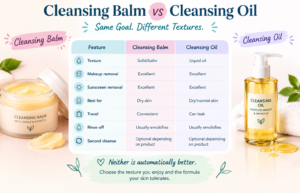
Cream Cleanser vs Gel Cleanser
| Feature | Cream Cleanser | Gel Cleanser |
| Texture | Rich | Lightweight |
| Foam | Usually, low | Low to moderate |
| Dry skin | Excellent | Good depending on formula |
| Combination skin | Good | Excellent |
| Sensitive skin | Often good | Formula-dependent |
| Heavy makeup | Moderate | Moderate |
| Fresh feeling | Moderate | High |
If your skin is very dry, then a cream/lotion cleanser should be your starting point. If your skin is combination-dry to slightly dry then a hydrating gel could be more attractive.
If you have very dry skin, a cream or lotion-based cleanser will be suitable. A slightly more hydrating gel may, however, be more desirable for combination-dry to slightly dry skin.
‘Non-Stripping’-what does it mean?
As there is no real scientific description for the product’s effect “Non-Stripping” may be more of a descriptive term used by a manufacturer than anything else. In simple terms it suggests a cleanser which cleanses without leaving skin feeling too tight, dry and uncomfortable-and is what is important to skin. Skin that ” feels tight” after using a “gentle” cleanser is unlikely to suit you
Does the cleanser need to have Ceramides?
No.
Ceramides are useful for support of a “skin barrier” skincare routine. That doesn’t mean one cleanser has to have Ceramides. It’s perfectly fine to use a Cleanser for Dry Skin without them.
Look at the formula, not a particular ingredient!
Do cleansers need to have Hyaluronic Acid?
Not really.
Hyaluronic Acid can be a hydrating ingredient but its presence does not automatically make Cleanser superior.
Your Moisturizer and other leave on products generally also contribute to the long-term moisturizing if the Cleanser you are using is a rinse-off type.
Does Dry Skin Need an Exfoliating Cleanser?
Most likely, if a Skin is already severely Dry, heavy exfoliation isn’t your #1 priority
If you have dryness focus first on:
Gentle cleansing + Moisturizing + barrier support
After Skin is accustomed to all the above you might decide that it even needs a exfoliant. Exfoliating too often would be even more drying.
Can you use Salicylic Acid Cleanser on dry Skin?
It is mainly for acne and pores that seem stuck and the constant washing with it may even make it feel unpleasant if Skin is extremely dry.
Perhaps you could do both since Skin needs pore cleansing and has Dryness. Maybe trying some ingredients one day or two rather than automatically on a daily basis will be necessary.
Can you use Glycolic Acid Cleanser on dry Skin?
It is one type of AHA, so it exfoliates Skin.
It may be useful, for some people. It is not usually the first Cleanser I’d recommend for severely Dry Skin or sensitive Skin. If Skin barrier is irritated simplify your routine first.
Signs Your Cleanser Is Harsh
Cleanser may not be suitable if you regularly experience:
- Immediate tightness
- Burning
- Stinging
- flaking
- Redness
- Roughness
- Increased sensitivity
- Persistent dryness after washing
I have noticed that one isolated experience does not necessarily mean the cleanser is wrong but repeated symptoms are worth paying attention to.
Signs You Have Found the Right Cleanser
A suitable cleanser should generally leave skin feeling:
- Clean
- Soft
- Calm
- Not excessively tight
- Not burnin
- Not visibly irritated
Remember:
Clean does not have to mean
Best Cleanser Routine for Dry Skin
A simple routine can be more effective than an one.
Morning
- Water. Gentle cleanser
- Hydrating serum if desire
- Moisturizer
- Broad-spectrum sunscreen
Evening
- Cleansing balm/oil if necessary
- Gentle cleanse
- Hydrating treatment if desire
- Moisturizer
You do not need ten products
Regularity is more important.
Best cleanser for dry skin: Ingredients list Look for:
When shopping looks for: characteristics
- Fragrance-free
- Gentle
- Hydrating
- Creamy or low foam
- Non-stripping
- Suitable, for sensitive skin if needed
Potentially useful ingredients
- Glycerin
- Ceramides
- Panthenol
- Hyaluronic acid
- Squalane
- Fatty acids
- Niacinamide
- Aloe
Ingredients or characteristics to approach cautiously
- Strong fragrance
- Harsh cleansing formulas
- Excessive exfoliating acids
- High alcohol content
- Products that repeatedly cause tightness
- Sodium lauryl sulfate if it aggravates dryness
Selecting the Ideal cleanser For Dry Skin, you may searching for right cleanser that suited your skin condition of Dry Skin but in a market, there were millions of cleansers. Follow these points for select the right cleanser for you, in which case is mentioned below.
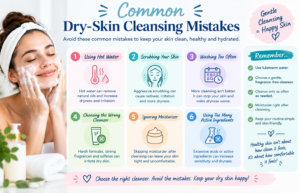
Tips Generally for Dry skin,
The best type for dry skin are creamy or lotion type cleanser which has less probability to absorb your skin natural oils
Ingredients that look-a-like, the best type of ingredient to search while choosing cleanser for Dry Skin like Hyaluronic Acid, Ceramides, Glycerine, Shea Butter, any plant oil like jojoba, sunflower, olive etc.
For more precise selecting,
If skin condition is Dry Sensitive: Choose for Fragrance Free Cream, Lotion or gel type cleanser and always go for skin patch test as it’s not advisable to get it wrong in any possible circumstances.
If skin condition is Dry Acne prone: Choose mild, non-comedogenic, which will never cause skin clogs and gel or cream cleanser type suitable for such skin.
If skin condition is Dry+ mature skin: Dry and mature skin condition has a high requirement of moisture on the skin hence it should prefer lotion or cream type cleanser that help replenish moisture.
If the skin condition is Dry with usage of Makeup: If use to remove make up with heavy lotion or any other, cleansing oil or balms will work out more effective on dry skin while cream and lotion cleanser will effectively cleanse.
If skin condition is combination-dry: An adequate and balanced type of cleaner for these types of skin is hydra-gel type of cleanser.
If skin condition is eczema prone skin: It is better to select for such skin any simple and fragrance-free type cleaner, rather consult for professional tips or dermatologist if prescribed.
Where can I find good cleansers:
I found a directory of recommended sensitive products by the National Eczema Association, the official Seal of Acceptance product directory here. Some examples from the directory for sensitive skin are:
- Cetaphil Gentle Skin Cleanser – Can be used every day to remove makeup.
- Vani cream Gentle Facial Cleanser – Designed for sensitive skin.
Cetaphil Daily Facial Cleanser Fragrance Free. My dry skin appreciates this; since I am a makeup wearer, but I only wash at night.
Good Molecules Hydrating Facial Cleansing Gel. For dry skin, but this does not feel as dry or tight as what my sensitive skin wants.
SEEN Face Wash Fragrance Free. This works, but it still can be tight for my sensitive skin.
Tower 28 SOS Daily Balancing Cleanser. Sensitive skin recommended and this is good.
Remember-these products might still not be suitable for you-as everyone’s tolerance levels are different!
Patch testing a new sensitive skin cleanser
- You need a small amount, apply to an area you would not normally use a product, the patch should test skin to the side of your earlobe, or below your jawline. Leave on for 24-48 hours to check for signs of reaction. Any signs to stop use of a new product include Burning or stinging, itchiness, redness, swelling, rash or bump on the skin, persistent tenderness.
- If there’s no adverse reaction from my skin then I use it, and if the product causes an unfavourable response the user stops use and consult a Doctor If necessary
Dryness as opposed to dehydration:
These two different terms do not refer to the same condition; there are differences between the two:
Skin Type: This is about lipids (sebum) for the skin- whether the skin has plenty or a shortage, thus will give it structure:
Dry skin has little to no sebum. Its lipids are deficient. It will be prone to losing more moisture, making it feel rough and look dull.
Skin water content:
Dehydrated skin is due to alack in water-no matter if you can or cannot hold it, it needs help. You can have oily and dry skin or normal skin can be dehydrated.
How climate affects a cleanser:
Climate in your local region should influence the cleanser that is used. Here are few explanations;
Cold Dry Weather: the person may select a cream-based cleanse and a heavier lotion.
Warm Humid Weather: may opt for gel and lighter lotion which contain sunscreen-it would protect your skin while giving it balance from the humidity.
When you are in an air-conditioned environment, your skin will naturally lose moisture. It can lead your skin to feel tight and rough. A moisturizer application, but not washing, can rehydrate.
Finding a cleanser to tackle dryness in an Indian environment:
An Indian climate offers unique skin concerns; In the warmer months the humidity makes an Indian’s skin feel hot. While Indian skin’s hydration does not typically drop, due to sweating the barrier can be weakened and that causes for loss of hydration. Your dry skin might tolerate not washing twice during the day, but it would surely recommend for you to apply a moisturizer after.
There can be a difference of opinion and understanding; I use “Skin type” to describe amount of lipid and/or water present in/for skin; ‘Skin condition’ is for any reaction to skin, example; irritation due to sensitive skin patch.
List of potential mistakes regarding dryness when it comes to washing skin:
First cleanse
Use:
- Cleansing balm
- Cleansing oil
- Gentle makeup remover
2. Best dry skin beginners routine:
Cleanse or water rinse; Moisturize; Sunscreen
Reasons for night cleansing / washing the skin if skin is dry: If your skin feels tight or extremely dry upon waking you might be able to just splash water on it although some still say it feels cleaner if the skin is washed. However, any dirt, sweat, oil and sun cream has to come off. According to the AAD, they advise skin care products for dry skin be used judiciously; use cleansing when it will be beneficial.
Night: 1. Wash with gentle cleaner 2. Moisturizer once you have this basic routine down then you can always incorporate other things that you may need.
AM vs PM Cleansing Routine for Dry Skin
Your routine isn’t the same morning and night The level of your morning or nightly cleansing needs to change based on your needs: Morning.
If your skin is dry, you will be able to use nothing but water in the morning for a rinse. Night. You should wash your face in the evening with a cleanser.
You want to remove the sunscreen, makeup, grime, and pollution that builds up on your skin throughout the day, along with sweat.
The American Academy of Dermatology suggests washing dry skin, but too much washing isn’t recommended.
When should you see a dermatologist.
If you have signs of dry skin, but not severe symptoms, and you find that it’s improving you can go ahead and manage it with your skin care routine.
When to see a dermatologist about dry skin If you’re experiencing the following, you should make an appointment with a dermatologist: Cracking Bleeding Consistent itching or burning Extreme redness and swelling Frequent rashes Pain Symptoms of infection according to Mayo Clinic. If your skin is extremely dry it can even result in skin that is cracking and infection as a result. Your doctor can figure out whether your skin is simply dry skin or the result of an underlying condition that may need specific treatment such as eczema or psoriasis.
The Last Word: How to Find Your Ultimate dry skin cleanser.
The “best” cleanser for your skin isn’t going to be based on:
1) Which one has the most ingredients.
2) Which one is the most expensive.
3) Which one is the hardest-working cleanser.
For dry skin, a basic philosophy is all that is really needed
Wash gently. Moisturise liberally. Remove irritants easily.
Choose a cleanser that will:
- Be mild and sensitive
- Have no added perfumes
- Feel very soft.
- Is right for your skin type.
- Not remove all natural oil.
- Will be easy and convenient to use each day
Cream or lotion cleansers,balms, and mild gel cleansers all have potential as effective dry-skin cleansers.
For water-resistant sun protection and cosmetics, a cleansing balm or oil might be followed by a mild wash. If your skin is extremely dry it’s possible you will only need to wash less often than once a day. Crucially;do not allow yourself to determine a good wash by which foam is strongest or just how ‘squeaky clean’ dry skin feels after use. Feeling ‘healthy’ after being cleansed your skin needs to feel clear and comfortable – not tight burning or stressed.
Dermatology advice continually reassures a balance to cleansers and emphasizes not washing with overly hot water, limiting over-cleaning and adding moisture to skin when it is still moist.
If dryness is profound persistent painful chapped or presents itself with irritation consult with a doctor if any symptoms worsen as there might be a more serious condition that needs medical attention.