
 GoBeauty Bay
  Shaista Rafi
Beauty & Lifestyle Content Writer
in
Shaista Rafi writes reader-focused beauty
and lifestyle content for GoBeautyBay,
covering skincare, hair care, makeup,
personal care and everyday beauty topics.
Shaista Rafi
Beauty & Lifestyle Content Writer
in
Shaista Rafi writes reader-focused beauty
and lifestyle content for GoBeautyBay,
covering skincare, hair care, makeup,
personal care and everyday beauty topics.
 Mirza Ibrahim Ali Khan
Editorial Reviewer
in
Mirza Ibrahim Ali Khan contributes to
GoBeautyBay's editorial review process,
focusing on clarity, content structure,
topical relevance and reader usefulness.
Mirza Ibrahim Ali Khan
Editorial Reviewer
in
Mirza Ibrahim Ali Khan contributes to
GoBeautyBay's editorial review process,
focusing on clarity, content structure,
topical relevance and reader usefulness.
Self-care isn’t the same as a full spa day (unless you want it to be). Self-care doesn’t require you to book a $200 massage, to take an entire day off from work, or to implement a complicated wellness regimen. Some of the most helpful types of self-care are the smallest, most regular ones.
Incorporating a daily self-care ritual enables you to make choices to address the demands of your physical body, emotional well-being, interpersonal relationships, overall mental health, and needs forest.
Once it’s part of the routine, you no longer add this thing to your plate-it simply became what you do naturally. Not that more is better, but the right ritual for YOU is the one you’ll stick with!
What IS a Daily Self-Care Routine?
A routine consists of intentional rituals aimed at sustaining your physical and emotional state (or whatever you feel needs your support today!).
Some activities include Sufficient sleep Sufficient eating Sufficient water Sufficient movement Skincare Routine breaks Stress management Visiting loved ones Engage in a hobby Limit unproductive time spent on your phone Take alone time
Self-Care Should Not Be Rigid
The amount and intensity of your self-care might shift based on your workload, energy levels, life’s circumstances and daily obligations.
It’s not necessary to perform everything perfectly, nor will every routine be the exact same each day; consistency is all that matters in the long run!
Why Daily Self-Care IS Important
When life gets demanding, your own needs can be relegated to the bottom of your priority list. Skipping meals, insufficient sleep, working constantly, lack of exercise, or never giving yourself a chance to relax eventually leads to physical exhaustion and mental exhaustion.
Establishing a consistent, effective routine for self-care allows you to engage with your own self before becoming entirely overwhelmed by life, and is likely to improve many aspects, including:
- Physical health
- Mental health
- Energy levels
- Emotional health
- Stress levels
- Personal confidence
- Overall quality of life
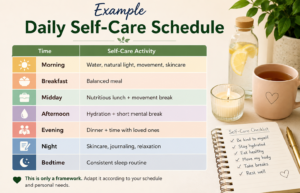
Morning self-care routine
The way in which your morning starts can often impact your entire day and is also a prime opportunity to really invest in your well-being. You may not have an extremely early start, or you may prefer to follow a minimalist lifestyle, whatever that looks like for you, is perfect:
- Consistent start Waking up and starting the day at a consistent time
- Stay hydrated Have a glass of water in the morning and continue to do so throughout the day.
- Get in some daylight Expose yourself to natural light
- Move your body light stretching, walking or yoga.
- Eat a healthy breakfast if that’s what you do: This will provide fuel and nutrients to kick start your day, foods that keep you full and nourished are beneficial
Skincare
This doesn’t have to be lengthy or have too many steps:
A quick cleanse, moisturise and apply SPF can fit easily here. I am not referring to a ‘perfect’ morning, just making conscious time for myself to start off the day.
Middle-morning routine
In most lives midday comes into play when you are in the middle of your workload or tasks. This point in the day can make your physical and mental body more tired and a few simple breaks in routine can keep this from overwhelming you: move your body (get up and stretch!) drink water has your midday meal; if it’s an energy and protein packed meal you’re less likely to get the afternoon slump.
Step outside; it can be an easy two or five minutes, just step away from wherever you are and go outside. Practice some simple slow breathing exercises; or just sit and let yourself be at peace for five minutes. Check in; where is your energy and stress levels are at in this moment?
Let your eyes off your screen periodically; it sounds simple however taking this break from your monitor can also help your eyes to reset.
An Evening Self-Care Ritual
Getting ready for sleep with a peaceful and soothing ritual that helps you to Transition from your active work life to a more restful state. Some simple examples may be: cleansing your skin to remove any remaining impurities from the day make to-do lists for the day tomorrow so they’re out of your head, so you aren’t stressing them at night-time reduced any unnecessary screen-time after all it’s been proven to increase stress, so reduce it before you go to bed get some rest (e.g) reading a book or listening to an album that you love.
Relax: this can be as simple as doing light stretching, reading, or listening to music.
A warm relaxing shower or bath can also work a treat! Connect with loved ones: spend some peaceful quality time discussing the day’s events with friends, family or your other half; remember relationships are an important form of self-care too! Prepare for bed, the environment around you must help you to get a restful sleep, so the darkness and the calm nature surrounding you must reflect that.
Self-care for physical wellness
You don’t have to spend excessive time doing exercise; integrate it naturally: Choose an activity which excites and encourages your activity such as walking, strength training, yoga, cycling, swimming or dancing, dancing is always such fun for instance!
Perhaps if you do a lot of of the hardest sort of work during the day easier perhaps for you to keep it gentle during the evenings.
Selfcare for mental health and emotional wellbeing.
Your emotional and mental wellbeing needs as much care as your physical body: Journaling, mindfulness meditation, deep breathing exercises, taking small time-outs, spending time outdoors in nature, spending time chatting with your nearest and dearest/loved ones and using the kindest words you’d give to a friend as you say them to yourself. It’s not about removing uncomfortable thoughts entirely but identifying the root cause.
How to incorporate nutrition into your wellness journey
Nutrition is a huge factor contributing to our health and well-being, but it should not be a cause for added stress. Take charge and fuel your body with an abundance of plant-based protein, fruit, veg, pulses and nuts. Meal prepping Your meals can make a significant impact on keeping your routine on track. Focus on getting enough from your meals and avoid any rules around your meals at all costs, allow space to enjoy your food.
Personal care & beauty as self-care
Your self-care could very well come in the form of showering or bathing in the morning/evening: Skincare procedures, haircare or oral hygiene habits could and should feel soothing and relaxing and that personal grooming that you do not want to think of as being the most time-consuming part of your day, is actually very important.
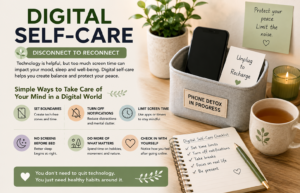
Digital self-care
Technology is a huge part of modern living, although it can be easy to keep it simple so that we are not constantly disturbed. If anything, these rituals make us more mindful throughout the entire day with the technology which exists in our current world! Avoid notifications; avoid spending too much time on screen-time, eating alone without digital influences and don’t get caught in the trap of scrolling when you have nothing else on. Self-care as it turns out also comes from an honest space which looks like taking away our need to always try and be perfect; in everything which we do.
A Weekly self-care reset.
Once a week, spend 30-60 mins or however long is best for you, planning for your day and meal plan/prep. This keeps you organized and in charge. Should be: laundry work out outfits set, booking workout time in, getting your schedule for cleaning or a mini tidy, top up personal stuff (toiletries, etc.)
How to keep up with self-care routine
One of the biggest errors people make is to overhaul their current life with a new list of 20 tasks to accomplish in their day. My advice would be to select one or two tasks per area (that is, four areas = eight different things to do in your daily day, as a example.) and build up gradually.
Phase 1: identify which parts of your life you need to improve upon,
2: Start with small routines; remember there’s no way to get everything perfect in just one day.
3: Connect habits that need to work together, (e.g.
Brushing teeth/skincare/clean and tidied sleeping area.)
4: Keep this fluid, this doesn’t mean you’ve failed if you miss one day in routine so simply just go back and complete it tomorrow.
5: Aim for routine; it makes the most sense if you focus on keeping things consistent.
Example Daily Self-Care Schedule
Common Mistakes to Avoid During Self-Care:
Don’t make self-care another thing on your to-do list – there’s no need to be perfect when it comes to your day! Don’t compare yourself to others on social media, or your neighbour, or anyone else; focus on creating routines that are conducive to your personal life and schedule. Don’t make it all about beauty – skincare and grooming are fun, but self-care should encompass your sleep, nutrition, movement, social life, emotional health, and the ability to set boundaries.
Don’t disregard sleep – be busy; it doesn’t mean being healthy.
Don’t add multiple new habits to your day – create your list, start with just one and add more to it as you get comfortable.
FAQ
How often should I practice self-care?
What does my schedule or circumstances might permit. Aim to do at least one thing each day and have some longer session devoted to self-care each week.
What’s the best daily self-care routine?
It depends on your life and goals. But there is never a person who couldn’t benefit from a healthy amount of self-care involving: 1) Nutrition 2) sleep 3) physical movement 4) emotional balance 5) mental peace 6) personal space 7) leisure time
How do I squeeze self-care into a tight schedule?
Introduce small but consistent habits that become ritual: take five minutes out of your workday for a walk, set the alarm to go to bed five minutes early, meditate for a few minutes.
Can skincare be self-care?
Of course. If you are using this time as an opportunity to slow down and show yourself some affection, it is self-care. What do I have to do to make sure self-care becomes habit?
Start small; make yourself practice some self-care once a week; add one new self-care habit to your routines that is something that supports existing habits, maintain reasonable expectations for yourself when it comes to habits like self-care; don’t think that if you miss doing something one day it means you’ve failed at yourself-care practices!
Final Thoughts
These guidelines on establishing a simple, everyday self-care routines and lifestyle choices are a great guide to kick-start you own personal, well-being focused habits. Self-care is not something that you should do only when you are exhausted; rather self-care should naturally become one component of your everyday health and lifestyle. Start with even one small habit and it should evolve into sustainable lifestyle habits you can implement throughout your years to enhance your personal physical health, emotional health, mental health, and social well-being.