
 GoBeauty Bay
 Shaista Rafi
Beauty & Lifestyle Content Writer
in
Shaista Rafi writes reader-focused beauty
and lifestyle content for GoBeautyBay,
covering skincare, hair care, makeup,
personal care and everyday beauty topics.
 Mirza Ibrahim Ali Khan
Editorial Reviewer
in
Mirza Ibrahim Ali Khan contributes to
GoBeautyBay's editorial review process,
focusing on clarity, content structure,
topical relevance and reader usefulness.
B vitamins are a group of water- nutrients that are involved in energy metabolism, cell function and many other processes in the body. Skin cells are always growing and renewing so getting nutrition—including enough B vitamins—is a key part of keeping skin healthy.
Biotin, also called vitamin B7 is one of the B vitamins that gets a lot of attention in beauty products and supplements. It is often sold for skin, hair and nails.. Having enough biotin is not the same as taking large amounts of biotin supplements. For people who already get enough there is not proof that extra biotin makes skin, hair or nails better.
Other B vitamins, vitamin B3, which is also called niacin and niacinamide are also connected to skin health. Knowing what these vitamins do can help people make choices about what to eat how to care for their skin and whether to take supplements.
What Are B Vitamins?
B vitamins are a group of vitamins that each do different things. They include:
- Vitamin B1 (thiamin)
- Vitamin B2 (riboflavin)
- Vitamin B3 (niacin)
- Vitamin B5 ( acid)
- Vitamin B6
- Vitamin B7 (biotin)
- Vitamin B9 (folate)
- Vitamin B12
They are not the same. Each one has its job and needs.
For skin health it is better to think of B vitamins as part of nutrition not as a group of “beauty vitamins.”
How B Vitamins Help Skin
B vitamins help support cell function, metabolism and tissue repair. When the body does not get enough of a B vitamin it can cause changes in the skin.
For example a severe lack of niacin can cause pellagra, which leads to skin that turns red or brown in the sun. A lack of biotin can cause skin rashes and other issues. These problems show how important nutrition is,. They do not mean that extra B vitamins will make normal skin better.
Vitamin B3 and Skin
Vitamin B3 or niacin is very important for skincare because one version of it niacinamide is used in skincare products.
Niacin helps the body turn food into energy and supports cell growth. Eating enough of it is important for health.
Niacinamide on the hand is used in cosmetics and skin treatments. It should not be confused with taking amounts of niacin.
Niacinamide is often in products that deal with skin tone, too much oil, visible pores and a weak skin barrier. It is popular because it works well and is easy to use with skincare routines.
Vitamin B5
Vitamin B5 or pantothenic acid helps with energy and the creation of substances in the body.
It is found in foods so people who eat a varied diet usually get enough. Pantothenol and similar ingredients might be in skincare and hair products. These should not replace a healthy diet.
Vitamin B2
Vitamin B2, also called riboflavin helps with energy and normal cell activities. A severe lack can harm tissues over the body.
Than taking riboflavin just for beauty the main goal is to eat a balanced diet that gives enough B vitamins.
What Is Biotin?
Biotin is vitamin B7. It helps certain enzymes work better those involved in breaking down fats, carbs and proteins.
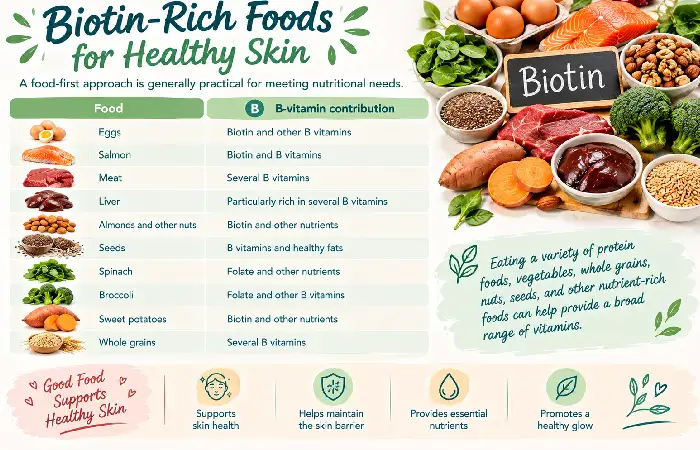
Biotin is found in foods like:
- Eggs
- Fish
- Meat
- Organ meats like liver
- Nuts
- Seeds
- Sweet potatoes
- Spinach
- Broccoli
For adults 19 years and older the recommended amount is 30 micrograms a day. Most people can get enough through food.
Biotin and Skin: What Does the Research Say?
A lack of biotin can cause skin problems, like rashes. Can also cause hair loss and weak nails.. Biotin deficiency is rare.
This has led to products that promise glowing skin, stronger nails and better hair.. The benefits of biotin only matter if someone is not getting enough.
The NIH says that there is not proof that biotin helps in healthy people. Some small studies found nails in some people but there is not much evidence for skin and hair. More research is needed.
Do High-Dose Biotin Supplements Help?
Not always. Some beauty products have thousands of micrograms of biotin more than the 30 mcg daily. There is not evidence to say that high-dose biotin is good for people who are not low in it.
One big issue is that high amounts of biotin can mess up lab tests. This can make results wrong including those, for thyroid hormones and other important tests.
So if you take a biotin supplement tell your doctor or lab before getting a blood test.
Biotin-Rich Foods for Healthy Skin
B Vitamins in Skincare Products
Some ingredients that come from B vitamins are more useful when applied to skin than when taken as supplements.
Niacinamide
Niacinamide is one of the common ingredients that come from B vitamins. Niacinamide can be found in:
- Serums
- Moisturizers
- Toners
- Cleansers
- Spot-focused products
- Body lotions
Niacinamide is often chosen for routines that aim to out skin tone reduce oiliness shrink visible pores or strengthen the skin barrier.
Panthenol
Panthenol is linked to vitamin B5. Is often used in products that moisturise and condition. Panthenol can be found in skincare, haircare and body‑care formulations.
The benefit of putting these ingredients on skin is different from taking a B‑vitamin supplement. A topical product puts an ingredient onto skin while dietary vitamins help the body in other ways.
B Vitamins for Skin Concerns
Dry Skin If skin feels dry good nutrition matters but B‑vitamin supplements do not replace a good moisturizer. Look for ingredients such as glycerin, ceramides, petrolatum and other barrier‑supporting ingredients.
Oily Skin Niacinamide is often used in products made for combination skin. Niacinamide can fit into routines without needing an oral vitamin supplement.
Uneven Skin Tone Topical Niacinamide is often part of routines that aim to improve skin tone. Consistent sunscreen use is also crucial because UV light can worsen pigmentation concerns.
Sensitive Skin People with skin should add new products slowly. Even ingredients that are usually well tolerated can irritate some people especially when many active products are used at once.
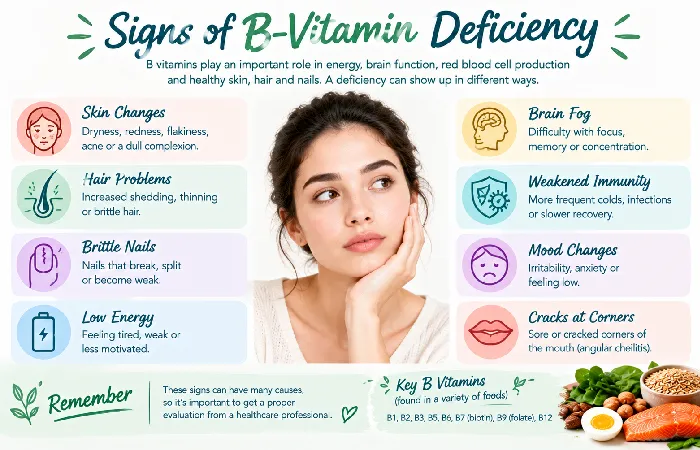
Signs of B‑Vitamin Deficiency
Most people who eat a varied diet do not need to worry about a B‑vitamin deficiency. Still deficiencies can happen in some situations.
Depending on the nutrient a deficiency can cause symptoms in skin, mouth, hair, nervous system or blood.
Biotin deficiency for example can cause skin rashes, hair loss and brittle nails. Severe niacin deficiency can cause pellagra and distinct skin changes.
If skin or hair changes long it is better to find the real cause than to start a high‑dose supplement automatically.
Should You Take Biotin for Skin?
For healthy people there is no strong evidence that taking a high‑dose biotin supplement will clearly improve skin when diet already supplies enough.
If a health professional finds a deficiency adding supplements can be right. The American Academy of Dermatology also says to use supplements such as biotin when a deficiency is found not to take them routinely for hair when levels are normal.
FAQs
Biotin is needed for normal metabolism and a severe lack can cause skin problems. However there is proof that a high‑dose biotin supplement improves skin in people who are not deficient.
Niacinamide, a type of vitamin B3 is one of the common B‑vitamin ingredients used in skincare. Panthenol, which comes from vitamin B5 is also common in products that moisturise.
There is not proof to say that biotin supplements can treat acne. Acne is better handled with proven skincare ingredients. If needed professional help.
Yes. Large amounts of biotin supplement can affect some lab tests. May give wrong results. Inform your health professional about biotin supplements before a blood test.
Adults 19 and older need an intake of 30 micrograms per day. Pregnant adults also need 30 micrograms while those who are breastfeeding need 35 micrograms.
Final Thoughts
B vitamins are nutrients that support normal cellular function and overall health and some B‑vitamin ingredients have useful roles in skincare. Biotin is especially popular in beauty supplements. Current evidence does not show that a high‑dose biotin automatically leads to healthier skin for people who already get enough.
A balanced diet is usually the base for getting B vitamins. For skincare ingredients such, as niacinamide and panthenol can be useful additions depending on skin concerns and the rest of the routine.
If you have skin changes you may also have hair loss, brittle nails or other symptoms that worry you. In that case talk to a healthcare professional of assuming you need a high‑dose vitamin supplement.